Showing posts with label ducks. Show all posts

Thursday, February 17, 2011

Lift Off

Blue-winged Teal - 1/24/2009
Blue-winged Teal female in flight (Anas discors)


Taken at the Greens Bayou Wetlands Mitigation Bank in northern Harris County.

Friday, January 14, 2011

The Daily Bird: Blue-winged Teal

Blue-winged Teal - 3/16/2009
Blue-winged Teal male (Anas discors)

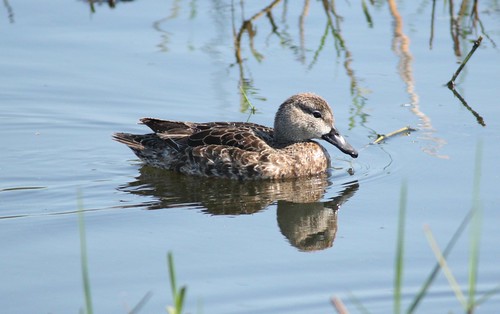
Blue-winged Teal - 3/16/2009
... and the female

Blue-winged Teal - 3/16/2009

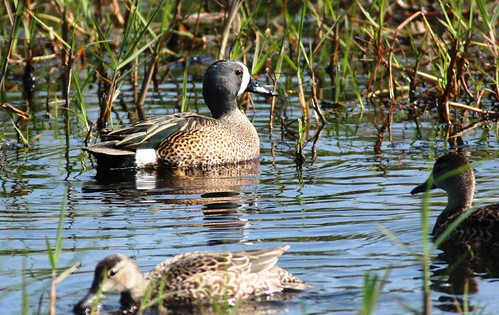
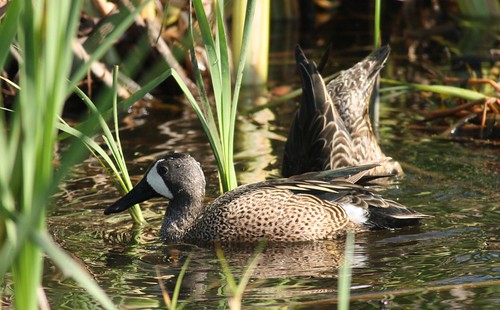
Blue-winged Teals - 3/16/2009

Blue-winged Teals - 3/16/2009


Pictures taken at the San Bernard National Wildlife Reserve near Lake Jackson, Texas. Click any image to see a larger version.

Monday, May 11, 2009

Bird Photography Weekly: Whistling Ducks

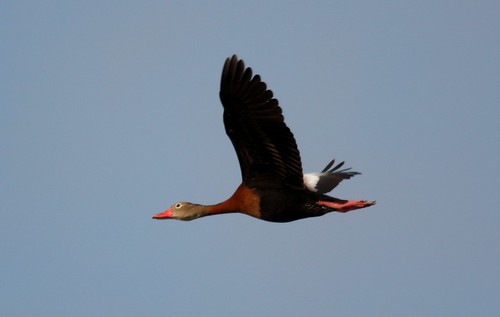
I have had several good opportunities since the beginning of the year to see Black-bellied Whistling Ducks, but for one reason or another had never come away with any decent photographs of them. But it was one of the first birds I saw when I arrived at Brazos Bend State Park, flying over the parking lot toward 40-acre Lake.

Black-bellied Whistling Duck - 4/24/2009
Black-bellied Whistling Duck (Dendrocygna autumnalis)

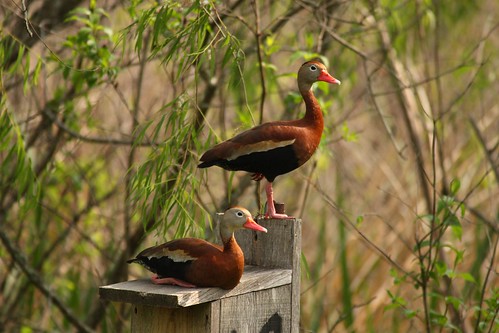
We got several good looks at the whistling ducks throughout the morning, both in the lake and perched on various stumps and trees around the water's edge. But the best by far was this pair that was perched atop a trailside nesting box.

Black-bellied Whistling Ducks - 4/24/2009

You can see the entire set of shots from Brazos Bend here.


For more great bird photos from around the world, check out Bird Photography Weekly #37.

Bird Photography Weekly

Tuesday, April 7, 2009

San Bernard Revisited

It's been three weeks now since I returned to San Bernard National Wildlife Refuge with three separate memory cards full of photos. I've simply got to work on getting a better turnaround for getting pics downloaded and posted!

(Note: You can click on any of the images in this post to see the full-sized, detailed versions on Flickr.)

The morning sun rose unseen behind a dense fog that had settled in from the coast to well north of Houston, but the weathermen swore it would clear out by mid-day. As luck would have it, the skies had just about cleared by the time I made it to the Gulf Coast Bird Observatory in Lake Jackson, just a couple of miles from the refuge. Stopping over briefly at the GCBO, I started the morning watching cardinals, chickadees and titmice taking turns at the feeders and a tree full of roosting night-herons.

Yellow-crowned Night-Heron - 3/16/2009
Yellow-crowned Night-Heron (Nyctanassa violacea)

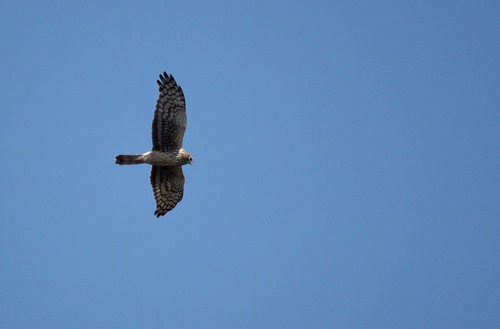
By the time I turned down the gravel and dirt road leading into San Bernard, the fog had finally burned off, revealing a beautiful expanse of crisp blue Texas sky chocked full of life.

Northern Harrier - 3/16/2009
Northern Harrier (Circus cyaneus)

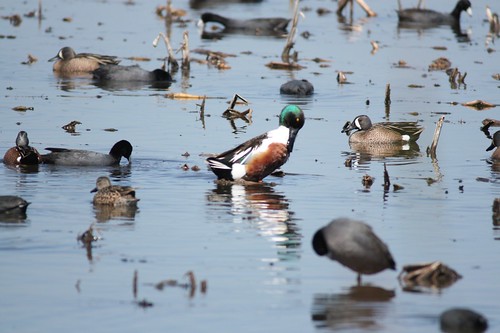
I started with the drive around Moccasin Pond, which was not quite as crowded as on my previous visit but still had plenty of waterfowl enjoying the spring weather. There were Blue-winged Teal, Northern Shovelers and American Coots aplenty.

Ducks on Moccasin Pond - 3/16/2009

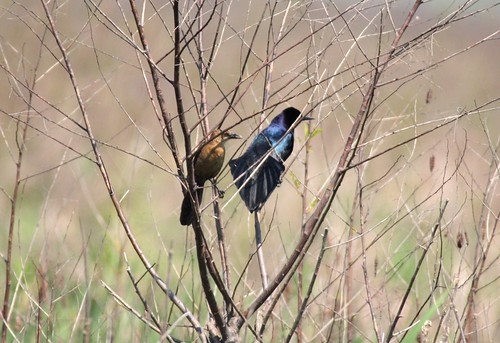
While I saw fewer Red-winged Blackbirds than expected, there was an abundance of Boat-tailed Grackles on hand. Males and females alike perched briefly on branches, reeds and roadside posts all along the drive.

Boat-tailed Grackles - 3/16/2009
Boat-tailed Grackles (Quiscalus major)

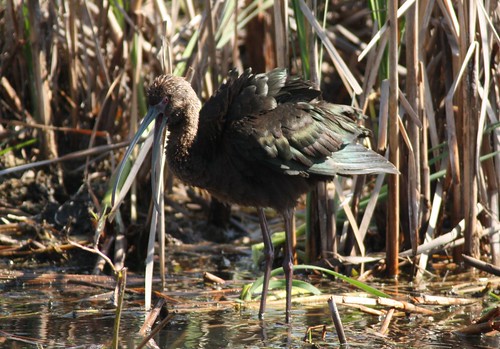
I also saw plenty of ibises, with both adults and a few juvenile White Ibis present. The White-faced Ibises were even more numerous than on my last visit, and they seemed especially active and vocal this day.

White-faced Ibis - 3/16/2009
White-faced Ibis (Plegadis chihi)

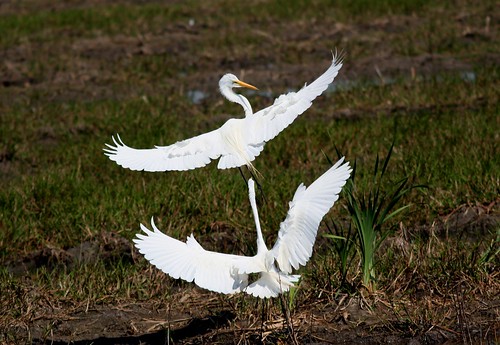
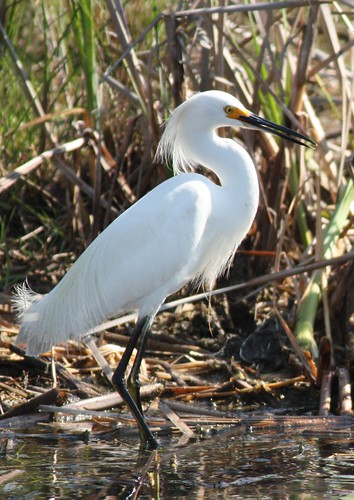
The egret family was well-represented...

Great Egrets - 3/16/2009
Great Egrets (Ardea alba)

Snowy Egret - 3/16/2009
Snowy Egret (Egretta thula)

... as were the herons.

Great Blue Heron - 3/16/2009
Great Blue Heron (Ardea herodias)

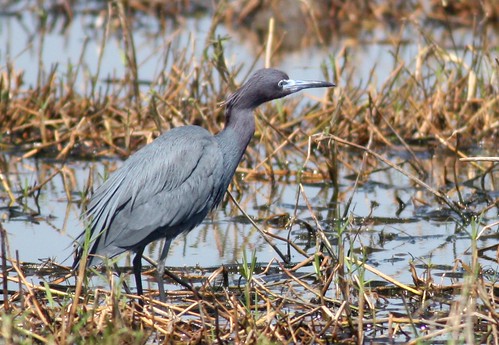
Little Blue Heron - 3/16/2009
Little Blue Heron (Egretta caerulea)

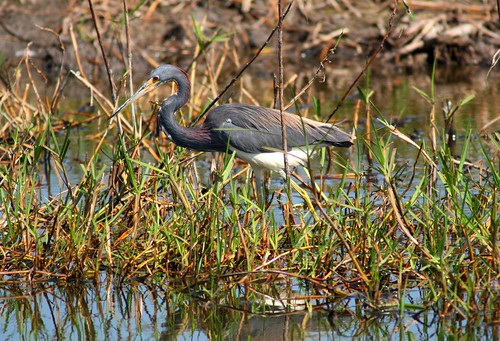
Tricolored Heron - 3/16/2009
Tricolored Heron (Egretta tricolor)

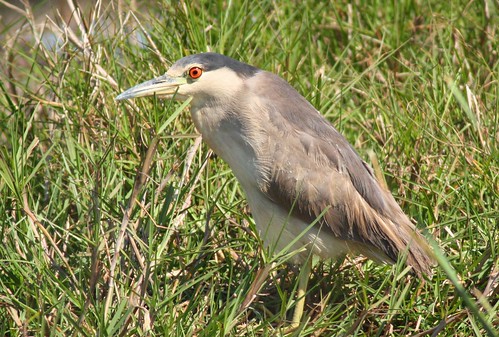
There were also a handful of Black-crowned Night-Herons, both adult and juvenile birds that had not yet lost their youthful plumage. The glowing orange of these night-herons' eyes were absolutely stunning.

Black-crowned Night-Heron - 3/16/2009
Black-crowned Night-Heron (Nycticorax nycticorax)

I have already posted several pictures of the kingfisher, grebes and bitterns that I saw, all of which were especially exciting finds.

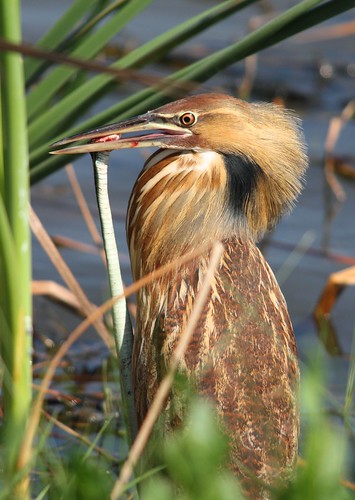
American Bittern - 3/16/2009
American Bittern (Botaurus lentiginosus)

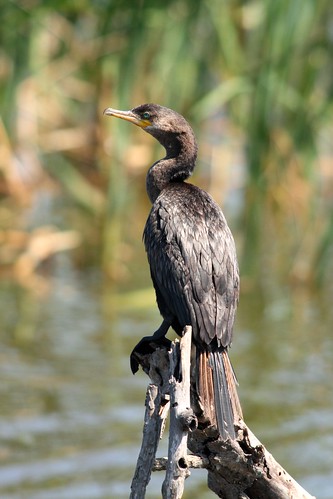
A trio of cormorants rounded out the highlights of the trip. One perched gracefully within fifty feet of my truck, its clear aqua blue eyes keeping a close watch as I crawled slowly by.

Neotropic Cormorant - 3/16/2009

There were at least a dozen or so more birds on hand, including gulls, several shorebirds, Tree Swallows, sparrows, kinglets, mockingbirds and cardinals. Plenty of Red Slider turtles, a sleeping snake and a pair of alligators also made appearances. All in all, this was one fantastic outing.

I've uploaded more photos from the trip to my Flickr photostream, in case you haven't had enough. (The first six in that set are from my previous visit to San Bernard, all others are from the more recent trip.)

Wednesday, April 1, 2009

Watery Wednesday #29

A couple more shots from my recent San Bernard trip, which in itself would have made a great Watery Wednesday post.

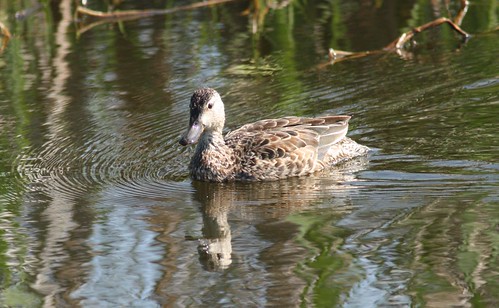
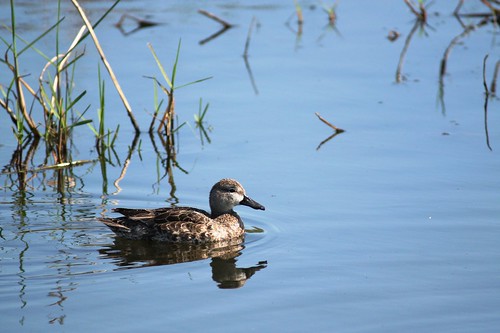
Blue-winged Teal - 3/16/2009
Blue-winged Teal, female (Anas discors)


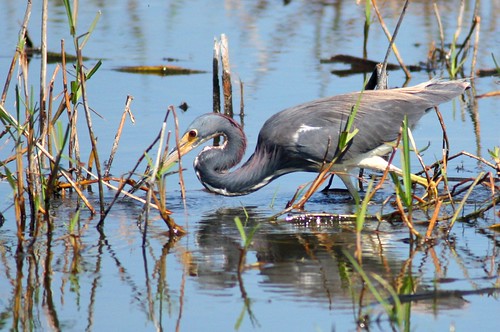
Tricolored Heron - 3/16/2009
Tricolored Heron (Egretta tricolor)


For more great water-themed images, visit the Watery Wednesday home page.

Watery Wednesday

Wednesday, March 4, 2009

A Bunch of Old Coots

I spent last Saturday morning down at the San Bernard National Wildlife Refuge with a small group of Houston Audubon Society members. About a dozen or so of us were met outside the refuge office by our guides, Brad Lirette (current VP of the Texas Ornithological Society) and his four-year-old son Jason. Brad's knowledge of the area was remarkable, and young Jason bravely took on the responsibility of searching for man-eating alligators, poisonous snakes and sticks. (Fortunately, only the latter was encountered in any great numbers.)

click to read Bill Saulmon's trip report
Photo courtesy of Bill Saulmon

The day started out on an auspicious note, with two Sandhill Cranes (the first of several lifers of the day for me) and a small flock of White-fronted Geese standing in a field nearby, and a White-tailed Kite hunting overhead. Unfortunately, a cold front had moved through the night before, leaving heavily overcast skies and buffeting winds that blasted us throughout the morning. I'll blame the poor light and blustery weather for the uninspiring quality of my photos from the trip — that's my story and I'm sticking to it!

When all had arrived, we headed to Bobcat Woods to start our adventure. The walk through the trees shielded us from the wind, but it also kept all but a handful of cardinals, kinglets and warblers under cover.

Moving out of the forested area, we were assaulted full-force by the cold winds as we stopped at the Wolfweed Reservoir. The few scopes that were brought out were shaking so hard that they were only minimally effective, but we did manage to spot a few ducks, cormorants and dowitchers.

Oh, and for the record, the title of the post does not refer to the wonderful group of birders that attended this trip. Rather, it's a tip of the hat to these hardy fellows who alone did not seem to mind the wind and weather one bit:

American Coots - 2/28/2009
American Coot (Fulica americana)

There were literally hundreds of American Coots dotting the wetland areas we visited, easily outnumbering any other species we saw.

There were a few interesting sights to be seen at Wolfweed. A lone juvenile Little Blue Heron made its slow way along the water's edge, off to one side of us. Everyone perked up at the sight of an immature Bald Eagle in the distance; I believe the consensus of the group put him down as a third year bird. We also had near flyovers of several White Ibis, Turkey Vultures and a lone Crested Caracara.

White Ibis - 2/28/2009
White Ibis (Eudocimus albus)

Retreating to the refuge of our vehicles, we made our way to the drive around Moccasin Pond. This, finally, was where most of the birds had taken shelter, hunkered down among the reeds and small islands that littered the area. Here were more coots, candy-corn billed moorhens, Boat-tailed Grackles and Red-winged Blackbirds. Here, too, were spoonbills, ibises, night-herons and egrets.
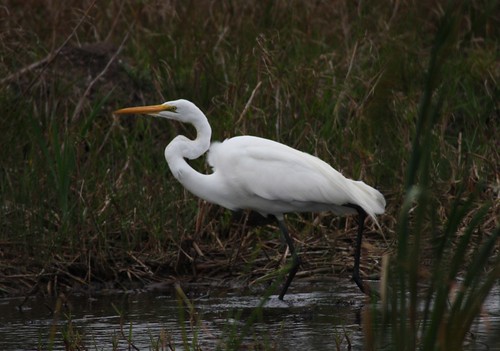
Great Egret - 2/28/2009
Great Egret (Ardea alba)

There were also ducks aplenty, including Shovelers, Pintails, Gadwalls, and both Blue- and Green-winged Teal. One of the highlights (and another lifer for me) was a small group of twenty or so Fulvous Whistling-Ducks huddled together near a floating gator.
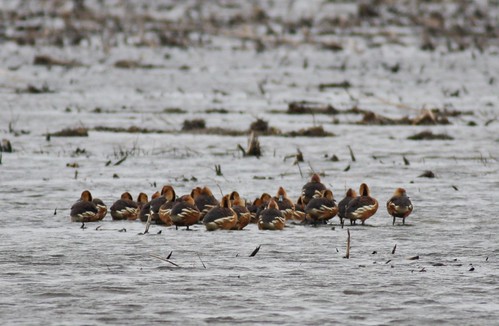
Fulvous Whistling-Ducks - 2/28/2009
Fulvous Whistling-Ducks (Dendrocygna bicolor)

Another bit of excitement came when we spotted a Peregrine Falcon actively hunting, diving in an attempt to stir up the ducks on the surface of the lake. Not far away, one of several Northern Harriers that we saw throughout the morning was also hunting, and it almost seemed for a short time that the two were working together to herd the waterfowl between them.

We did see a few shorebirds, although not as many as we expected. There were a handful of Yellowlegs (both species) running across the mudflats, and a small flock of Black-necked Stilts.

Black-necked Stilts - 2/28/2009
Black-necked Stilts (Himantopus mexicanus)

We also found two more lifers for me, a pair of Grebes. There actually were quite a few Pied-billed Grebes swimming along, not far from the roadside bank of the pond.
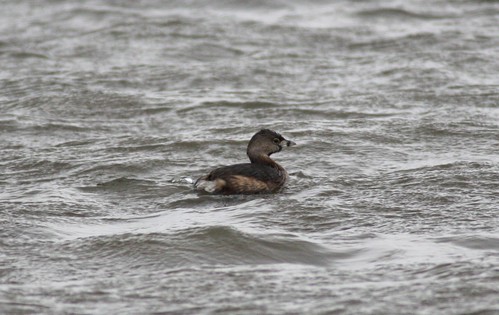
Pied-billed Grebe - 2/28/2009
Pied-billed Grebe (Podilymbus podiceps)

But the bird that many in the group were hoping to see was the Least Grebe that had been reported several times recently at the refuge. To everyone's delight, we finally found the grebe near the opposite end of the loop. Unfortunately, he was actively diving and moving quickly away from us, and between his constant motion and small size and the choppiness of the water, I was unable to get a decent picture of this tiny water bird. (See BirdingBev's recent post for a great capture of the Least Grebe from her visit to San Bernard NWR.)

Although I was very disappointed with the majority of the photos I came away with, I can't complain about any other aspect of this trip. The weather could have been a little more cooperative, but all in all it was an outstanding excursion. I came away with several new additions to my life list, and a total of somewhere around sixty species overall. You can bet that I will gladly go back to San Bernard NWR at the earliest opportunity.
Monday, January 5, 2009

Bird Photography Weekly: Mrs. Mallard

Yeah, yeah, I know... What's so special about mallards that would make them BPW-worthy? And the female mallards at that!

I don't care if they're found pretty much anywhere there's water. I just love those wonderful, iridescent blue racing stripes (speculum) they sport!

click image to enlarge
Mallard, female (Anas platyrhynchos)

And an action shot...

click image to enlarge

For more great bird photos from around the world, check out Bird Photography Weekly #19.

Bird Photography Weekly

Monday, December 29, 2008

Bird Photography Weekly: Whistling Ducks

Black-bellied Whistling-Ducks resting on the bank at Bear Creek Park in northwest Houston.

click image to enlarge
Black-bellied Whistling-Duck (Dendrocygna autumnalis)


click image to enlarge
According to reports by the Houston Audubon Society, Black-bellied Whistling-Ducks have recently been expanding their range in Texas. They can frequently be found in and around neighborhood ponds and lakes to the north and west of the Houston area. I have seen them on several occasions this fall at Bear Creek Park and once up north in the Tomball area, usually in groups of two to four.


For more great bird photos from around the world, check out Bird Photography Weekly #18.

Bird Photography Weekly

Wednesday, December 24, 2008

Rodents of Unusual Size

When we last saw our fearless adventurers, we had made it back to the final stop in our excursion to Meyer Park: the duck pond. Our path was quickly blocked by the guardian of the lake, but our courageous Cowboy quickly leapt to the forefront to challenge the menacing beast.

click image to enlarge
With eyes of steel and a handful of stale bread, our hero was able to gain us safe passage to the bountiful waters beyond.

The duck pond was teaming with life this day, with a half dozen or so Swan Geese actively competing for our bread crumbs with the Mallards that regularly inhabit the place.

click image to enlarge

click image to enlarge

click image to enlarge
Also visiting were this dandy duck-with-a-'do and his companion.

click image to enlarge click image to enlarge

Wading slowly near the opposite bank was a Great Egret, casually wandering back and forth as he searched the water for something a bit more lively to eat.

click image to enlarge
Near the bank where we were standing, Cowboy spotted this three-foot-long snake taking a siesta in the cool water.

click image to enlarge click image to enlarge

At first I was afraid it was a water moccasin, but the markings didn't look right for that. We never did figure out exactly what kind it was, but after a few minutes it tired of being a spectator sport and quickly swam out of sight.

Just then, Cat grabbed my arm. "There they are, Daddy! Quick, take a picture!"

I looked across the pond and spotted them — the Rodents of Unusual Size. All I could think to say as I lifted my camera was, "As you wish."

click image to enlarge
It was the "giant beaver things" that had prompted this weekend adventure. Nutria. (Or "neuter rats," as my high school buddy Cliff Gammill used to call them.) There were two or three of them swimming along without a care in the world, completely unconcerned with the noise of the people nearby. One of them even ventured out on the shore, just a few yards from where we stood.

click image to enlarge
I love those wonderful little hands, which they use to pick up and hold food as they eat, very much like raccoons do. If you are unfamiliar with nutria, they are a bit smaller than beavers but larger than a muskrat, with a long thick tail that flows gracefully out behind them as they swim.

click image to enlarge
They have webbed feet and rather sharp claws, and have lips that can be closed to allow them to chew while swimming without letting any water in.

click image to enlarge
After we watched the various inhabitants of this small pond for a while, the air turned cool and the rain we had been expecting all morning finally began to fall. So we bade the critters goodbye and headed off to enjoy a hot lunch before finally returning home.

Unfortunately, the dirty dishes and the laundry were still lying right where we left them.