Showing posts with label cormorants. Show all posts

Tuesday, February 9, 2010

Fishin's Over, Time to Get Back to Blogging!

When a friend asked me the other day when I was going to "come back from that fishing trip," I honestly had no idea what he was talking about. Turns out that my last post here bore the somewhat prophetic title of "Gone Fishin'." The prophetic part — I haven't posted a single time in the five months since. Ack!

As a matter of fact, I have hardly even done any birding since last September. About that time we started going into overdrive mode on a big project at work, with pretty much all "off time" (including lunchtime, evenings, late nights, weekends, etc.) being spent in bishok mode (butt in seat, hands on keyboard). Before I knew it, Christmas was here with choir programs and family in town and everything else that entails. Then the kids' school was starting back up, our project was going into final testing and then production, everyone got sick, the autotrophs began to cool, Neanderthals developed tools, we built a wall (we built a pyramid), math, science, history, unraveling the mysteries that all started with the... well, you get the idea. Busy.

Now here it is February already and suddenly I'm realizing — I need to get outside and live again! So yesterday I headed over to the little neighborhood park where I used to go so often on my lunchbreaks and WOW, I'd forgotten how wonderful it was to sneak away from the office in the middle of the day and just walk.

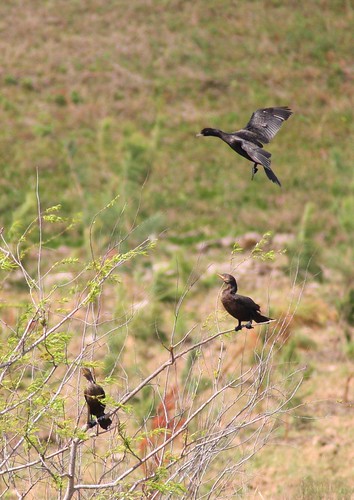
It was pretty cool and extremely windy, but as usual there was plenty of avian life to see. Twenty some-odd white ibis waded through the marsh and mud across the field, looking for their own lunches. A couple of red-shouldered hawks soared in the winds above the treetops. The resident kingfisher skimmed over the surface of the bayou, his rattling call echoing through the area. And almost a dozen cormorants were busy swimming and diving in the smaller pond.

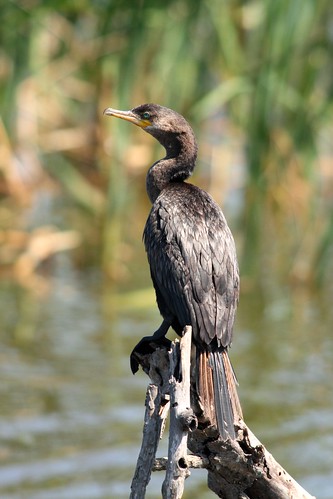
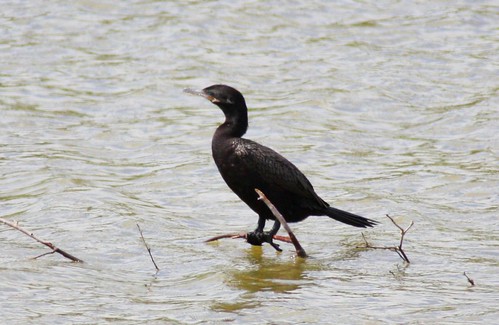
Neotropic Cormorant
Neotropic Cormorant (Phalacrocorax brasilianus)


Yup, it's past time I take down the "Gone Fishin'" sign and got back to birding!

Tuesday, April 7, 2009

San Bernard Revisited

It's been three weeks now since I returned to San Bernard National Wildlife Refuge with three separate memory cards full of photos. I've simply got to work on getting a better turnaround for getting pics downloaded and posted!

(Note: You can click on any of the images in this post to see the full-sized, detailed versions on Flickr.)

The morning sun rose unseen behind a dense fog that had settled in from the coast to well north of Houston, but the weathermen swore it would clear out by mid-day. As luck would have it, the skies had just about cleared by the time I made it to the Gulf Coast Bird Observatory in Lake Jackson, just a couple of miles from the refuge. Stopping over briefly at the GCBO, I started the morning watching cardinals, chickadees and titmice taking turns at the feeders and a tree full of roosting night-herons.

Yellow-crowned Night-Heron - 3/16/2009
Yellow-crowned Night-Heron (Nyctanassa violacea)

By the time I turned down the gravel and dirt road leading into San Bernard, the fog had finally burned off, revealing a beautiful expanse of crisp blue Texas sky chocked full of life.

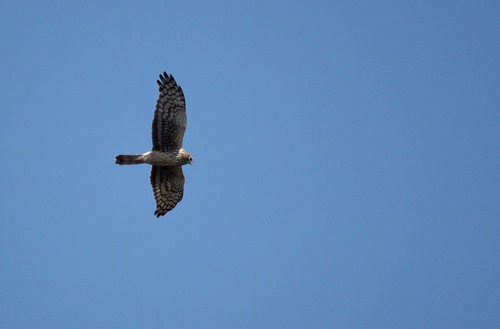
Northern Harrier - 3/16/2009
Northern Harrier (Circus cyaneus)

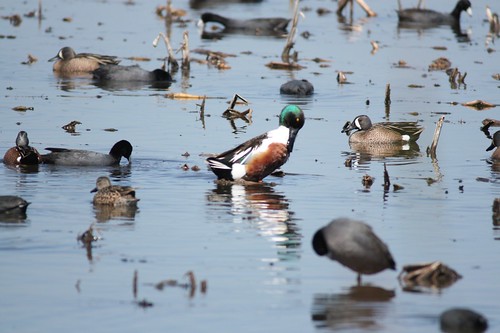
I started with the drive around Moccasin Pond, which was not quite as crowded as on my previous visit but still had plenty of waterfowl enjoying the spring weather. There were Blue-winged Teal, Northern Shovelers and American Coots aplenty.

Ducks on Moccasin Pond - 3/16/2009

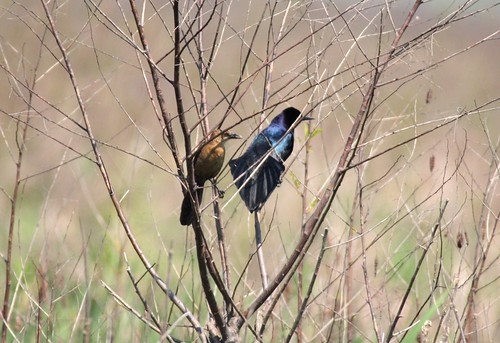
While I saw fewer Red-winged Blackbirds than expected, there was an abundance of Boat-tailed Grackles on hand. Males and females alike perched briefly on branches, reeds and roadside posts all along the drive.

Boat-tailed Grackles - 3/16/2009
Boat-tailed Grackles (Quiscalus major)

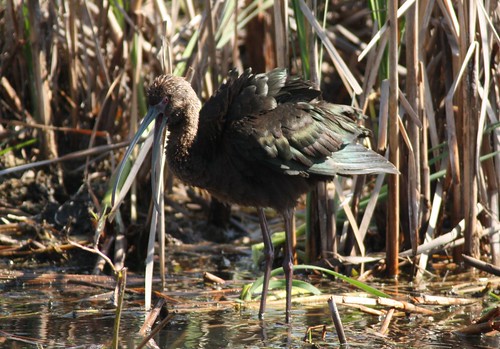
I also saw plenty of ibises, with both adults and a few juvenile White Ibis present. The White-faced Ibises were even more numerous than on my last visit, and they seemed especially active and vocal this day.

White-faced Ibis - 3/16/2009
White-faced Ibis (Plegadis chihi)

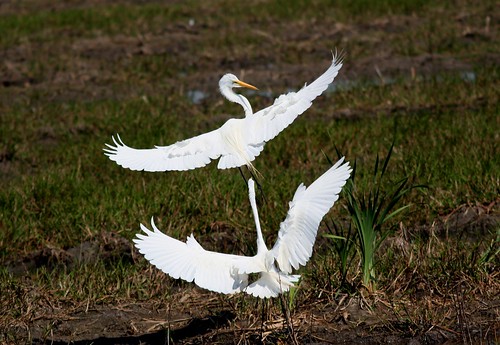
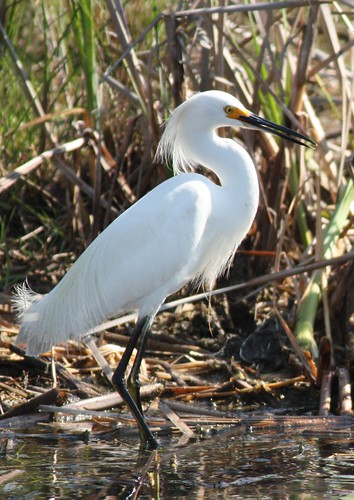
The egret family was well-represented...

Great Egrets - 3/16/2009
Great Egrets (Ardea alba)

Snowy Egret - 3/16/2009
Snowy Egret (Egretta thula)

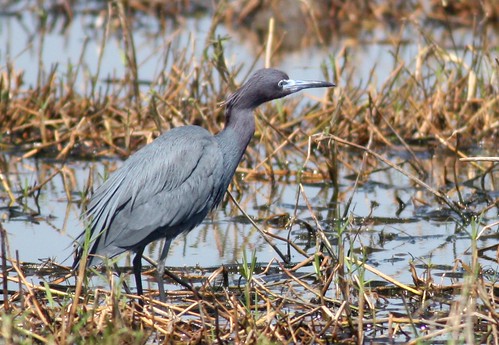
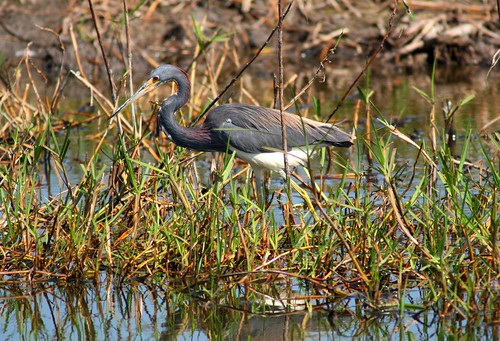
... as were the herons.

Great Blue Heron - 3/16/2009
Great Blue Heron (Ardea herodias)

Little Blue Heron - 3/16/2009
Little Blue Heron (Egretta caerulea)

Tricolored Heron - 3/16/2009
Tricolored Heron (Egretta tricolor)

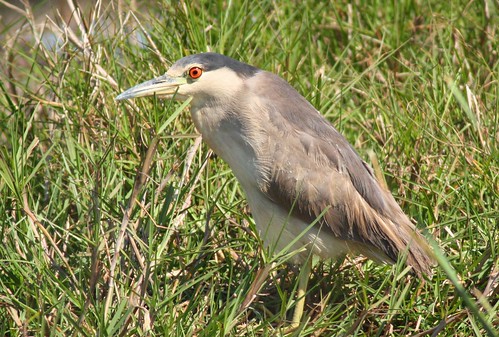
There were also a handful of Black-crowned Night-Herons, both adult and juvenile birds that had not yet lost their youthful plumage. The glowing orange of these night-herons' eyes were absolutely stunning.

Black-crowned Night-Heron - 3/16/2009
Black-crowned Night-Heron (Nycticorax nycticorax)

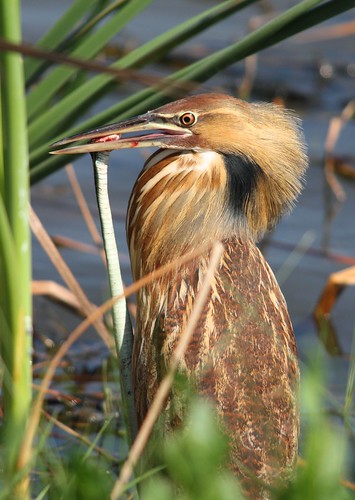
I have already posted several pictures of the kingfisher, grebes and bitterns that I saw, all of which were especially exciting finds.

American Bittern - 3/16/2009
American Bittern (Botaurus lentiginosus)

A trio of cormorants rounded out the highlights of the trip. One perched gracefully within fifty feet of my truck, its clear aqua blue eyes keeping a close watch as I crawled slowly by.

Neotropic Cormorant - 3/16/2009

There were at least a dozen or so more birds on hand, including gulls, several shorebirds, Tree Swallows, sparrows, kinglets, mockingbirds and cardinals. Plenty of Red Slider turtles, a sleeping snake and a pair of alligators also made appearances. All in all, this was one fantastic outing.

I've uploaded more photos from the trip to my Flickr photostream, in case you haven't had enough. (The first six in that set are from my previous visit to San Bernard, all others are from the more recent trip.)

Thursday, March 19, 2009

SkyWatch Friday #36

After four days of much-needed rain, the heavens over southeast Texas have turned a brilliant blue once again. And while we have awoken over the past several mornings to some of the thickest fog we've seen in months, once the mists burn off we are enjoying beautiful spring weather and cloudless skies.

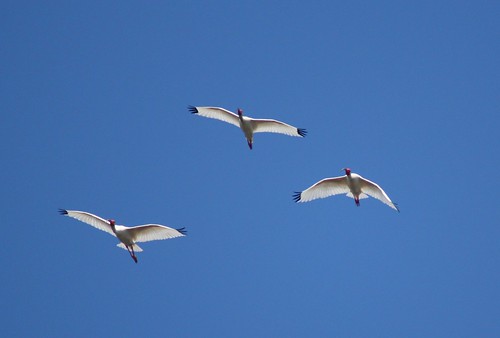
To celebrate the gorgeous weather, I took off from work one morning and headed back down toward the coast on a solo outing to San Bernard NWR. Just as I arrived in the reserve, the sun burned through the last patches of fog to reveal a glorious blue sky. And while there weren't any interesting cloud formations at which to gaze, there was plenty to garner my SkyWatching attention as herons, hawks, ibises, gulls and more filled the skies.

White-faced Ibises - 3/16/2009
(Click on any image to view the full-sized version)

White Ibises - 3/16/2009

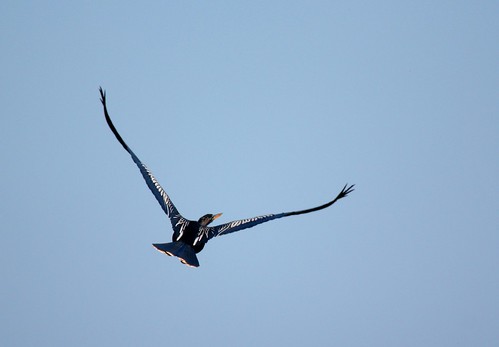
Anhinga - 3/16/2009

I'll post more pictures from the trip as soon as I can finish weeding through them all.


For more intriguing images of the skies above our world, check out the SkyWatch Friday home page.

SkyWatch Friday

Monday, March 9, 2009

Bird Photography Weekly: Double-crested Cormorants

I have written several times over the past months about a small neighborhood park near my office where I have taken quite a few quick but birdy lunch breaks. There are several things that make this location — which is only a few miles from the Galleria / "Uptown" area of Houston — ideal for birding.

While the neighborhood is only a few blocks off one of Houston's major freeways, the park itself is tucked into the farthest corner of that subdivision. Two edges of this small playground and shaded area are bordered by several acres of trees and heavy undergrowth, and the back side of the park runs up against White Oaks Bayou. Directly across the bayou from the park is another small wooded area where I have seen several hawks and kestrels roost from time to time. Next to this stand of trees and connected to the bayou is an enormous flood control area where, during rainier seasons, a large number of egrets can often be found; however, since the flood area is shallower than the bayou at this point, it does not hold standing water except after heavy rains.

I got a little more adventurous one day last week, and for the first walked down the bayou from the park for a half mile or so. Much to my surprise, I discovered a second flood control area hidden away back here, completely closed off from the surrounding roads and neighborhoods by small forested tracts. This section has a small standing "lake," complete with a small island and a number of large nesting trees right near the water's edge.

And while most of the Houston area is bone dry at the moment, this sheltered little paradise is thriving. I encountered a handful of Red-shouldered Hawks patrolling the surrounding trees, a Belted Kingfisher (who on three occasions moved from his cover in trees near the lake to soar down a long length of the adjacent bayou and back), several Snowy Egrets and — biggest surprise, to me anyways — four Double-crested Cormorants. I have never before seen cormorants this close to highly populated areas.

Double-crested Cormorant - 3/4/2009
Double-crested Cormorant (Phalacrocorax auritus)

Double-crested Cormorants - 3/4/2009

Double-crested Cormorants - 3/4/2009

You can be sure that I will be returning to this hideaway habitat on a fairly regular basis, whenever the time allows.


For more great bird photos from around the world, check out Bird Photography Weekly #28.

Bird Photography Weekly