Showing posts with label herons. Show all posts

Tuesday, April 19, 2011

Bad Hair Day

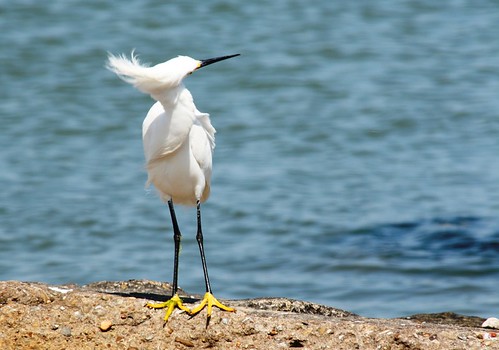
This egret reminds me of one of those models on a shampoo & conditioner commercial, slowly slinging her long silky hair back and forth with a flick of the head.

Bad hair day
Snowy Egret (Egretta thula)


Taken on a very windy day out on the Texas City Dike.

Friday, March 25, 2011

Texas City Dike

I have wanted for quite some time to visit the Texas City Dike, near Galveston, but the dike had been closed for the past two year for repairs of damages sustained during 2008's devastating Hurricane Ike. I've heard nothing but good reports since the dike reopened late last fall. So when I discovered I was the only one in the family who got Presidents Day off last month, I leaped at the rare chance for an outing.

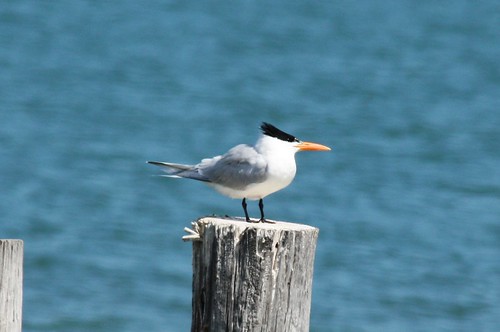
Royal pierage
Royal Tern (Sterna maxima)

The dike itself is very nice, extending out about two and a half miles into Galveston Bay. There is a paved, two-lane road running the length of it, several piers and boat ramps and a nice stretch of sandy beach on the northern side (away from the gulf).

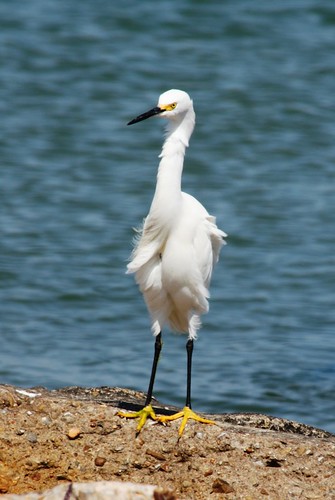
Golden slippers
Snowy Egret (Egretta thula)

Since spring migration was still several weeks away, there were not any unexpected birds to be seen. However, I still found almost twenty different species on and around the dike just in the short time I spent there. There were numerous Royal Terns, plus a lone Forster's Tern diving for food in the choppy waters of the gulf side of the barrier. As you would expect, gulls were everywhere, from giant Herring Gulls to the smaller Ring-billed and Laughing Gulls. There were also a handful of egrets, pelicans (brown and white), and lots of both Double-crested and the smaller Neotropic Cormorants.

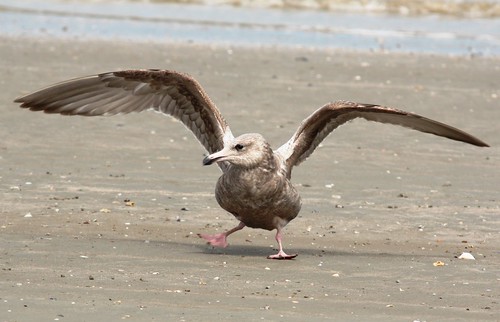
Ready for take-off
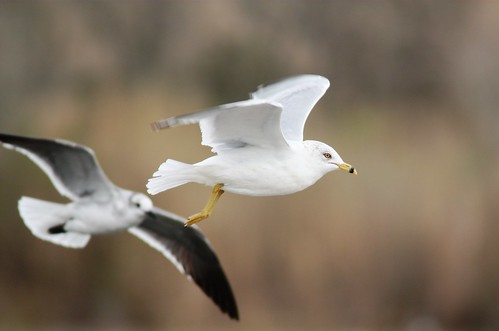
Herring Gull (Larus argentatus) in winter/non-breeding plumage

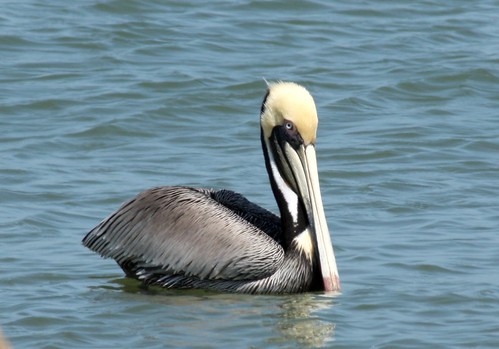
Brown Pelican
Brown Pelican (Pelecanus occidentalis)


I was a little disappointed at the extremely low numbers of shorebirds to be found, but I expect that will pick up quite a bit over the next few weeks as migration hits the Gulf Coast. The only shorebirds I saw were a lone Willet, two tiny Sanderlings and a handful of Ruddy Turnstones.

Watching all the gulls
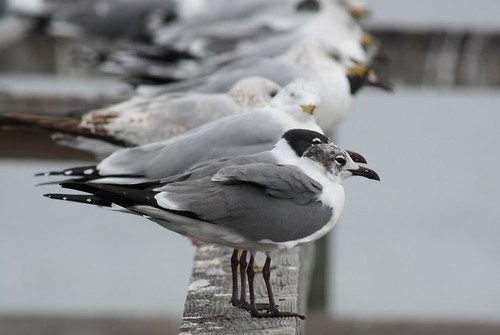
Laughing Gulls (Larus atricilla), with Ring-billed Gulls in the background

As I started to leave for home, I did make a very quick stop at the Bay Street Park, located just around the corner from the entrance to the dike. I was pleasantly surprised to find that the marshy pond running the length of this park held quite a few more birds, including Northern Shovelers, Gadwalls, Blue-winged Teal, American Coots and a couple of Pied-billed Grebes. A small pier overlooking the pond also gave some great photo opportunities with the dozens of gulls resting there.

Ring-billed Gull
Ring-billed Gull (Larus delawarensis), with a Laughing Gull in the background

All in all, this was a nice day of birding. I will definitely be returning to Texas City whenever I get the opportunity!


Note: As always, you can click on any of the images in this post to see a larger version.

Wednesday, February 16, 2011

On the Wing

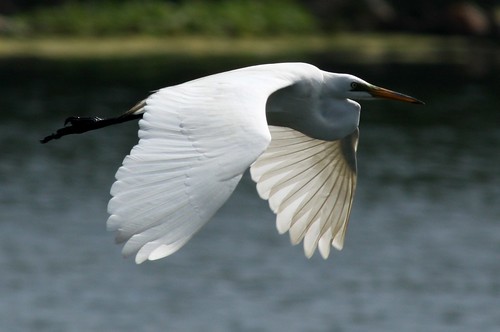
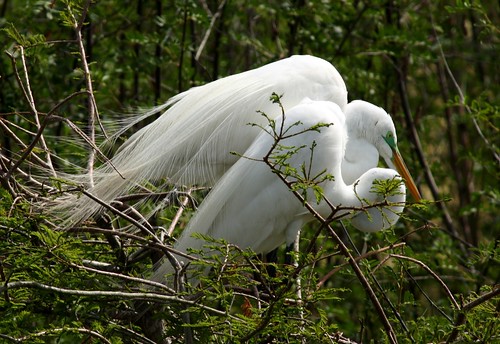
Great Egret - 4/16/2010
Great Egret (Ardea alba)


Taken at the Smith Oaks sanctuary in High Island, Texas.


As always, you can click on the image to see a larger version. Also, check out World Bird Wednesday for more great bird photos from around the world.

Monday, February 7, 2011

Nesting at the Rookery

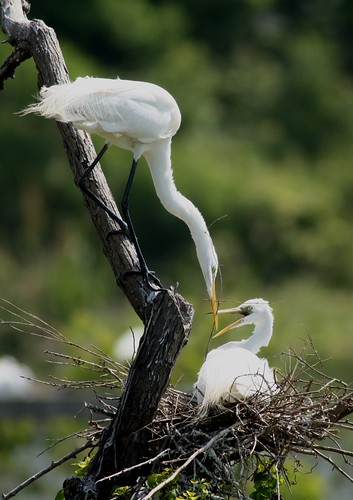
We are counting down the days until spring migration and nesting season hit the Texas Gulf Coast.

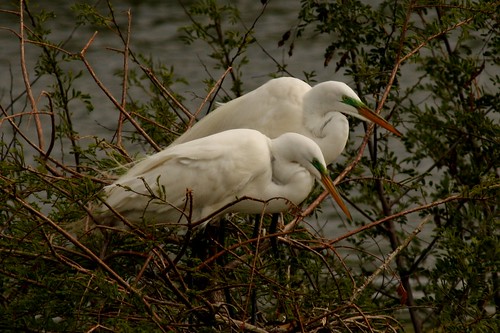
Great Egrets nesting - 4/16/2010

Great Egrets - 4/16/2010

Nesting Building at the Rookery
nesting Great Egrets (Ardea alba)

Taken last spring at the rookery at Smith Oaks sanctuary in High Island, Texas.


As always, you can click on any image to see a larger version. Also, check out Bird Photography Weekly #128 and World Bird Wednesday XII for more great bird photos from around the world.


Bird Photography Weekly

Friday, December 24, 2010

Sunday, November 7, 2010

Bird Photography Weekly

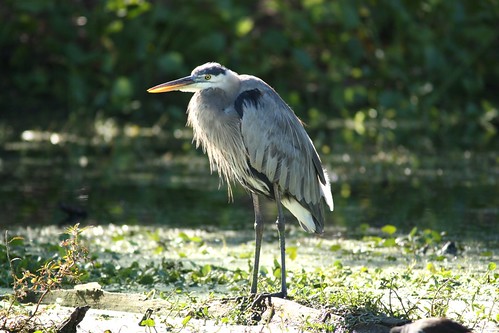
From my weekend camping down at Brazos Bend State Park, just a few miles inland from where the Brazos River meets the Texas Gulf Coast.

Great Blue Heron - 11/6/2010
Great Blue Heron (Ardea herodias)


Check out Bird Photography Weekly #115 for more great bird photos from around the world.

Bird Photography Weekly

Friday, February 12, 2010

In the Bleak Mid-Winter

Okay, so it's a little past "mid-winter," but with all the rain and sleet we've had lately and the temperatures hovering just barely above freezing, I'd say the bleakness wins out.

Luckily, I did catch a break in the steady drizzle long enough to make a run over to Bear Creek Park at lunch. Most of the park is currently closed — due to being underwater at the moment — but I was able to find a few objects of interest lingering on the outskirts of the flooded areas.

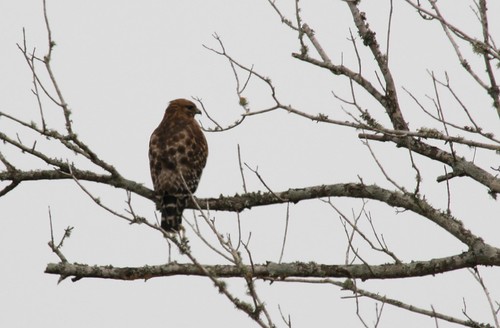
Red-shouldered Hawk - 2/10/2010
Red-shouldered Hawk (Buteo lineatus)

This Red-shouldered Hawk was hunkered down against the wet and cold, and nothing and nobody was going to make him move.

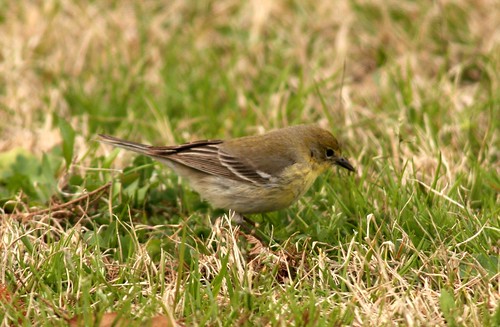
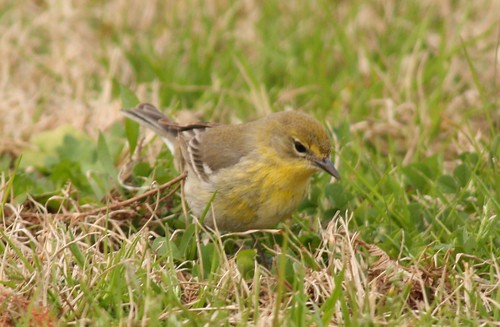
On the other hand, there were dozens of warblers flitting about, heedless of the inclement weather conditions.

Pine Warbler - 2/10/2010
Pine Warbler (Dendroica pinus)

Pine Warbler - 2/10/2010

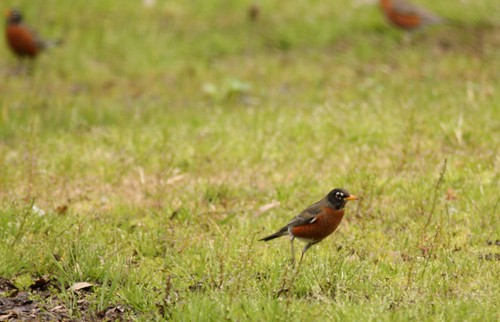
There were harbingers of the coming spring already in place as well, mobs of robins scouring the soggy green groundcover for sustenance during the cool spell.

American Robin - 2/10/2010
American Robin (Turdus migratorius)

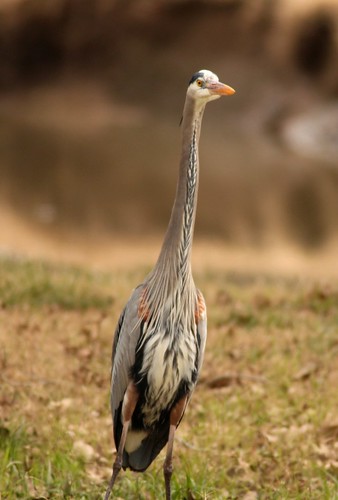
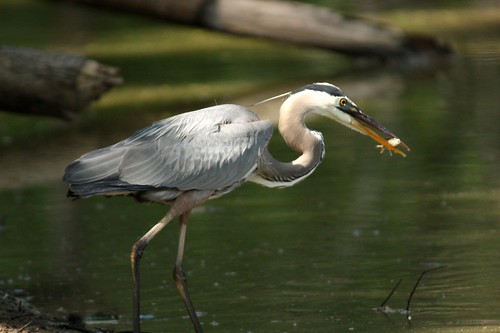
And as always, the waders were out and about, treading slowly through the standing floodwater and along the water's edge.

Great Blue Heron - 2/10/2010
Great Blue Heron (Ardea herodias)


I look forward to the end of this rainy season, to heading back onto the trails at Bear Creek once the water goes down and things dry out just a bit.

Monday, September 7, 2009

Gone Fishin'

Houston summers are not always the best for noontime birding. Between the heat and ... well, actually the heat is pretty much the problem all by itself. Blistering 100° days with 90% or higher humidity and little or no breeze just sort of takes the fun out of lunchtime excursions. Especially when the birds themselves are generally too smart to venture out between the hours of sunup and sundown.

But every now and then we get a little respite, a brief relief in the form of a day or two of cooling showers, and for a time the world comes alive again. On just such a day, I recently headed over to nearby Bear Creek Park to try to get in a little "fishing." Or more to the point, to look for a little fishing.

Great Blue Heron - 6/11/2009
Great Blue Heron (Ardea herodias)

As luck would have it, I found just what I was looking for, in the form of a handsome Great Blue Heron who was enjoying the temporary rise in the water level of Langham Creek.

Great Blue Heron - 6/11/2009

In just a matter of minutes, I watched as this majestic piscator caught and feasted on over a dozen small fish, a meal fit for a king.

Great Blue Heron - 6/11/2009

Unfortunately, my lunch break wasn't long enough to enjoy the spectacle for long. But days like this are wonderful reminders of how fortunate we are to have several scenic parks and venues around the Houston area where we can observe and appreciate the beauties of nature. Bear Creek Park is one of those places where you can always find such hidden treasures. And it invariably is the perfect destination when I need to take a little lunchtime fishing trip.


For more great bird photos from around the world, check out Bird Photography Weekly #54.

Bird Photography Weekly

Tuesday, September 1, 2009

Personality Portraits: Cattle Egrets

One thing I have noticed while photographing birds over the past couple of years is that, like people, different birds quite often seem to exhibit different personalities.

Sometimes this is a reflection of mannerisms and vocalizations, other times it is simply a side effect of distinguishing markings or other physical characteristics. But once you begin to closely study a group of birds, it is quite easy to realize that not all birds — even of the same species — look and act the same. Of course, it is also a little too easy sometimes to begin to assign human "personality traits" to birds and animals, simply because of their different looks.

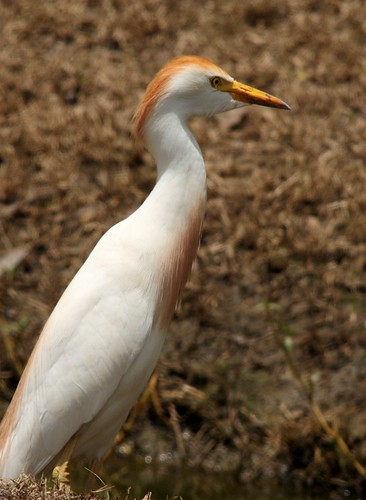
Take for instance this group of Cattle Egrets that I spent some time photographing a few weeks back. Looking back through my photos of the day, they each quickly stood out as a unique persona.

There was the cool bird, fit and trim, full of self-confidence:

Cattle Egret - 6/3/2009

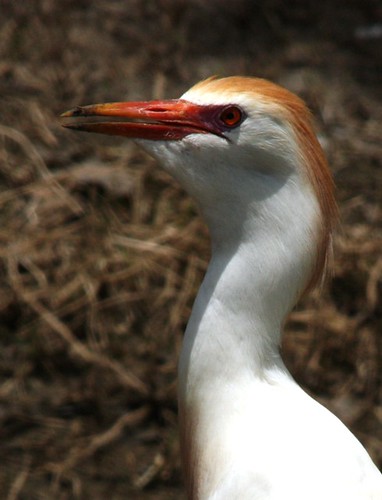
There was the cranky old codger with what seemed a permanent scowl on his face:

Cattle Egret - 6/3/2009

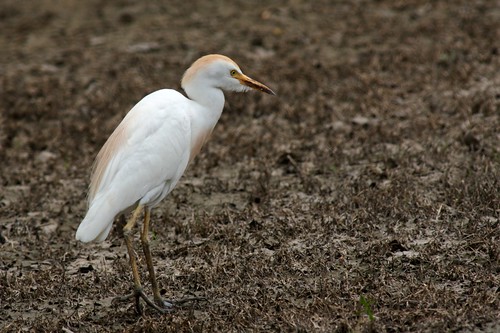
There was the quiet loner who stayed off by himself, meekly blending into the background:

Cattle Egret - 6/3/2009

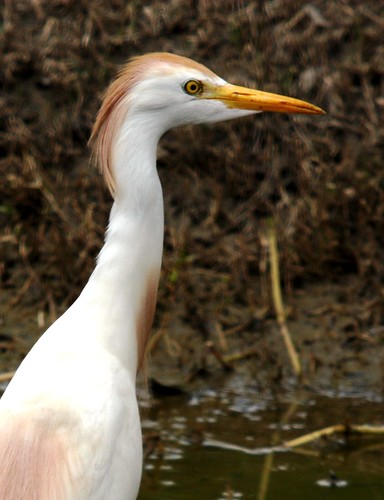
And then there was the tall, wide-eyed, gangly, gawky one — his hair never quite lying straight — who tried but just never quite fit in with the "cool" kids. You know, kind of a birdy version of me back in high school:

Cattle Egret - 6/3/2009

Of course, in reality all of these birds acted pretty much the same, too busy hunting for nourishment in the heat of a dry Texas summer to reveal much real personality. But that's part of the magic of photography: it can take a simple moment in time and feed the imagination into whatever wondrous revelations the mind can create.


For more great bird photos from around the world, check out Bird Photography Weekly #53.

Bird Photography Weekly

Monday, May 18, 2009

Of Mudbugs and Night-Herons

When the kids and I asked Tiffany where she wanted to eat out for her special (early) Mother's Day lunch last weekend, it was no surprise to any of us that she picked Pappadeaux, the Cajun seafood member of the Pappas Restaurants chain. We both have a weakness for their brand of vittles, and our overall favorite is a spicy combination of those two most wonderful Cajun delicacies: fried crawfish and crawfish etouffee. Oh, man, I'm getting hungry just thinking about it!

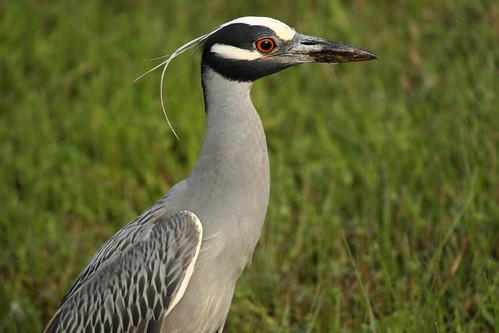
Crawfish, crayfish, crawdads, mudbugs — no matter what you call 'em, they're good eating. And it's not just Cajuns and Texans that think so. Just the other day on the way home from work I passed this distinguished-looking gentleman:

Yellow-crowned Night-Heron - 5/5/2009
Yellow-crowned Night-Heron (Nyctanassa violacea)

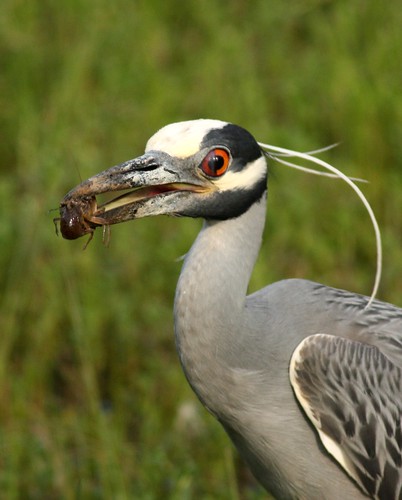
He was busily hunting frogs and crawdads in the post-flood mud near Big Cypress Creek. You can tell by the half-lidded expression of ecstasy just how much he was enjoying these fresh-caught morsels. (Fresh is always better than frozen when it comes to shellfish, you know.)

Yellow-crowned Night-Heron - 5/5/2009

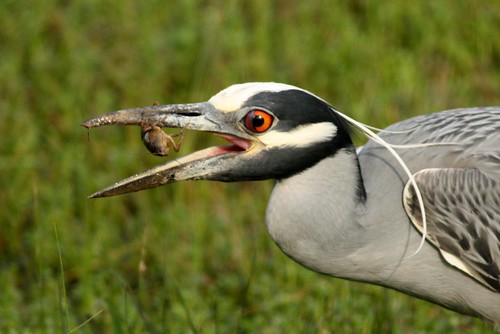
Of course, every now and then you come across one that's got just a little more kick in it than the rest. In fact, this poor fella found one particular critter that just refused to go down without a fight!

Yellow-crowned Night-Heron - 5/5/2009

Unfortuntely, after a brief battle that mudbug was lunch, and I had to leave the bird to enjoy the rest of his buffet. It just goes to show you, though — no matter our differences, everyone can agree when it comes to good food.

Hmmm, I wonder if Pappadeaux has frog legs on their menu...

[To view any of these photos in more detail, just click on the appropriate image to view them on my Flickr photostream, then click the "All Sizes" button above the image.]


For more great bird photos from around the world, check out Bird Photography Weekly #38.

Bird Photography Weekly

Monday, May 4, 2009

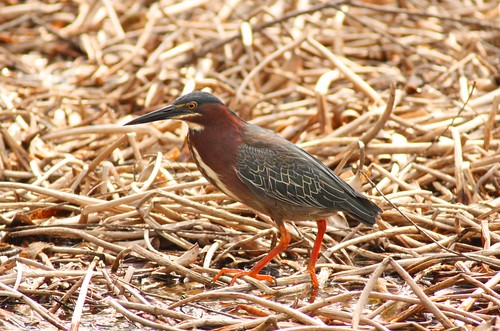
Bird Photography Weekly: Green Heron

Living in what has been nicknamed the "Bayou City" — surrounded by bayous, creeks and rivers — and less than a hundred miles from the Texas Gulf Coast, I am blessed to see an abundance of herons and egrets. It is rare day that I do not see a handful of egrets flying over on my way to work in the morning, and I can usually drive less than ten minutes from my office to find one or more species of herons during my short lunch break.

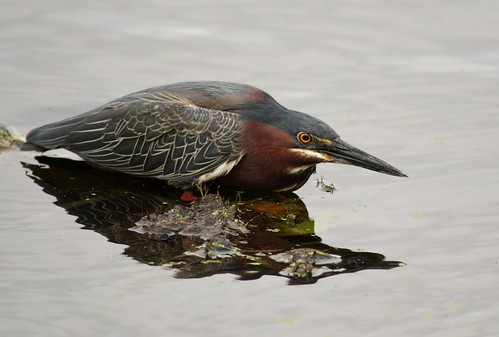
But until a week ago, I had never seen one particular member of the heron family that is supposedly not uncommon in this area: the Green Heron. I had followed numerous park trails and sighting reports in search of this small heron, but to no avail. So in heading to Brazos Bend last week, the Green Heron was at the top of my "Want to Find" list.

Green Heron - click to see full-sized image on Flickr
Green Heron (Butorides virescens)

Eureka! Twenty minutes into our hike around 40-acre Lake, we spotted our first Green Heron of the day. All in all, we came across seven of them lurking in or around the water's edge, with the last sitting patiently only about twenty feet away as we paused to admire the rich, earthy tones of his plumage.

Green Heron - click to see full-sized image on Flickr

What a magnificent way to add this beautiful bird to my life list!


For more great bird photos from around the world, check out Bird Photography Weekly #36.

Bird Photography Weekly

Tuesday, April 14, 2009

Bird Photography Weekly #33

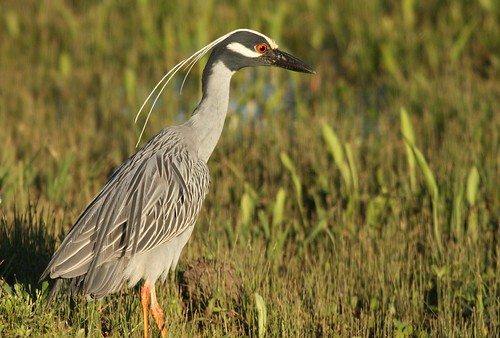
I passed this handsome fellow on the way to work this morning and just had to double back and grab a quick picture.

Yellow-crowned Night-Heron - 4/14/2009
Yellow-crowned Night-Heron (Nyctanassa violacea)


For more great bird photos from around the world, check out Bird Photography Weekly #33.

Bird Photography Weekly

Tuesday, April 7, 2009

San Bernard Revisited

It's been three weeks now since I returned to San Bernard National Wildlife Refuge with three separate memory cards full of photos. I've simply got to work on getting a better turnaround for getting pics downloaded and posted!

(Note: You can click on any of the images in this post to see the full-sized, detailed versions on Flickr.)

The morning sun rose unseen behind a dense fog that had settled in from the coast to well north of Houston, but the weathermen swore it would clear out by mid-day. As luck would have it, the skies had just about cleared by the time I made it to the Gulf Coast Bird Observatory in Lake Jackson, just a couple of miles from the refuge. Stopping over briefly at the GCBO, I started the morning watching cardinals, chickadees and titmice taking turns at the feeders and a tree full of roosting night-herons.

Yellow-crowned Night-Heron - 3/16/2009
Yellow-crowned Night-Heron (Nyctanassa violacea)

By the time I turned down the gravel and dirt road leading into San Bernard, the fog had finally burned off, revealing a beautiful expanse of crisp blue Texas sky chocked full of life.
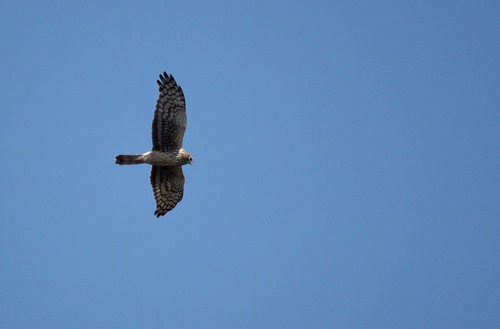
Northern Harrier - 3/16/2009
Northern Harrier (Circus cyaneus)

I started with the drive around Moccasin Pond, which was not quite as crowded as on my previous visit but still had plenty of waterfowl enjoying the spring weather. There were Blue-winged Teal, Northern Shovelers and American Coots aplenty.
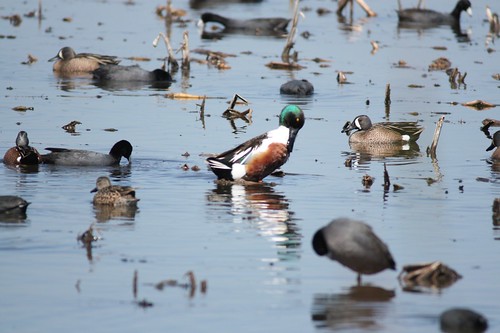
Ducks on Moccasin Pond - 3/16/2009

While I saw fewer Red-winged Blackbirds than expected, there was an abundance of Boat-tailed Grackles on hand. Males and females alike perched briefly on branches, reeds and roadside posts all along the drive.
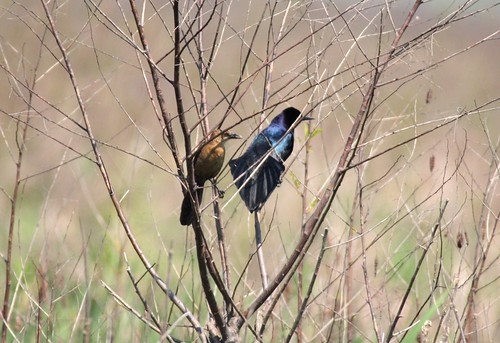
Boat-tailed Grackles - 3/16/2009
Boat-tailed Grackles (Quiscalus major)

I also saw plenty of ibises, with both adults and a few juvenile White Ibis present. The White-faced Ibises were even more numerous than on my last visit, and they seemed especially active and vocal this day.
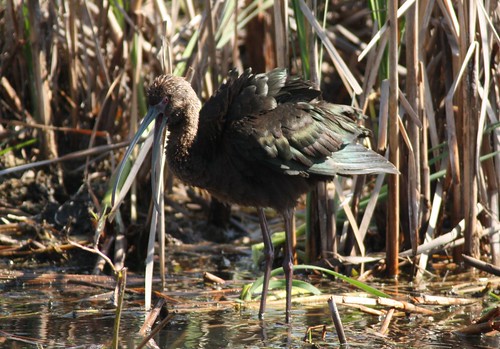
White-faced Ibis - 3/16/2009
White-faced Ibis (Plegadis chihi)

The egret family was well-represented...
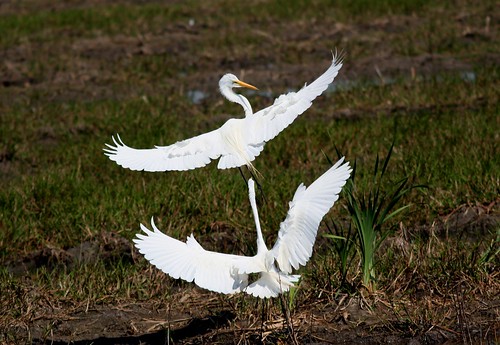
Great Egrets - 3/16/2009
Great Egrets (Ardea alba)

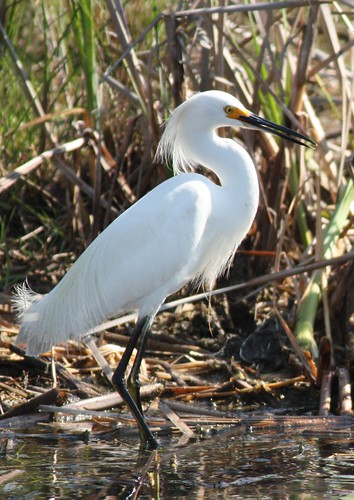
Snowy Egret - 3/16/2009
Snowy Egret (Egretta thula)

... as were the herons.

Great Blue Heron - 3/16/2009
Great Blue Heron (Ardea herodias)

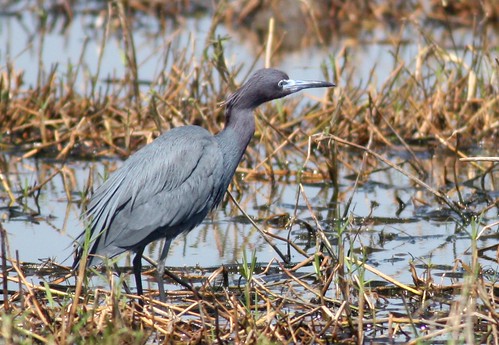
Little Blue Heron - 3/16/2009
Little Blue Heron (Egretta caerulea)

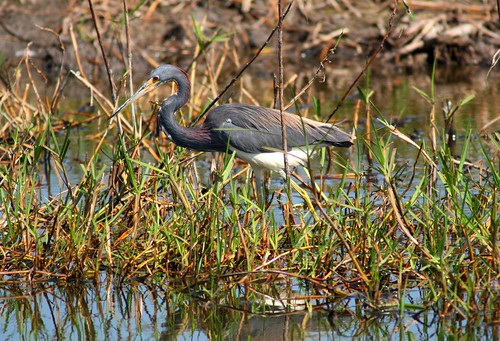
Tricolored Heron - 3/16/2009
Tricolored Heron (Egretta tricolor)

There were also a handful of Black-crowned Night-Herons, both adult and juvenile birds that had not yet lost their youthful plumage. The glowing orange of these night-herons' eyes were absolutely stunning.
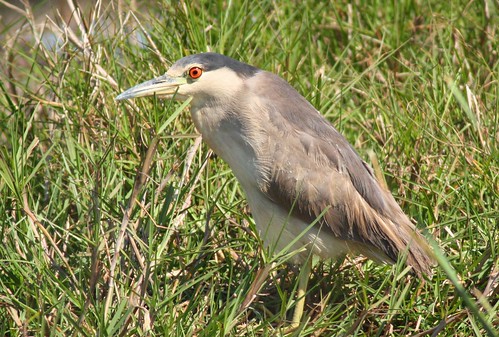
Black-crowned Night-Heron - 3/16/2009
Black-crowned Night-Heron (Nycticorax nycticorax)

I have already posted several pictures of the kingfisher, grebes and bitterns that I saw, all of which were especially exciting finds.
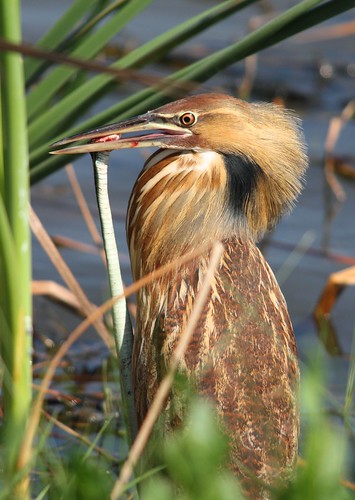
American Bittern - 3/16/2009
American Bittern (Botaurus lentiginosus)

A trio of cormorants rounded out the highlights of the trip. One perched gracefully within fifty feet of my truck, its clear aqua blue eyes keeping a close watch as I crawled slowly by.
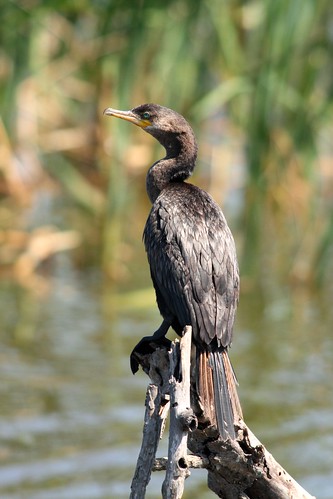
Neotropic Cormorant - 3/16/2009

There were at least a dozen or so more birds on hand, including gulls, several shorebirds, Tree Swallows, sparrows, kinglets, mockingbirds and cardinals. Plenty of Red Slider turtles, a sleeping snake and a pair of alligators also made appearances. All in all, this was one fantastic outing.

I've uploaded more photos from the trip to my Flickr photostream, in case you haven't had enough. (The first six in that set are from my previous visit to San Bernard, all others are from the more recent trip.)