Monday, July 6, 2009

Bird Photography Weekly: Birding Colorado

Last weekend, the kids and I headed to Colorado to visit my sister and her fiancé. We spent most of the day Saturday in Rocky Mountain National Park. (Most of the day, that is, until wimpy Dad got altitude sickness and the park rangers sent us scurrying down the mountain so I wouldn't pass out or toss my cookies all over their pretty little mountains ... but we won't bring any of that up, okay?)

Anyway, my first definitive lifer of the weekend was actually the Black-billed Magpie, a beautiful bird that we saw several times while driving and about which I am still kicking myself for the repeated phrase of, "No, don't stop. We've seen so many, I'm sure I'll get another chance to photograph it." D'oh!

However, the second lifer of the trip pretty much demanded that his picture be taken. As we stopped for a picnic lunch about a half hour inside the park, we could hear plenty of bird life surrounding us. Hawks cried from somewhere above, chickadees and other unrecognized passerines chirped and sang from within the full green branches, and a small woodpecker taunted us from the deep shadows of a nearby trunk. But almost before we had even managed to unpack our fruit and sandwiches, this handsome fellow came a'calling.

Steller's Jay - 6/27/2009
Steller's Jay (Cyanocitta stelleri)

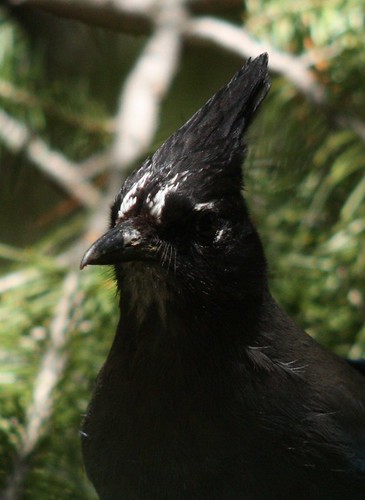
With his coal black eyes and head and crest of charcoal, this western jay is quite striking. The white streaking above and below its beak and around the eyes lend it an almost malevolent air.
Steller's Jay - 6/27/2009

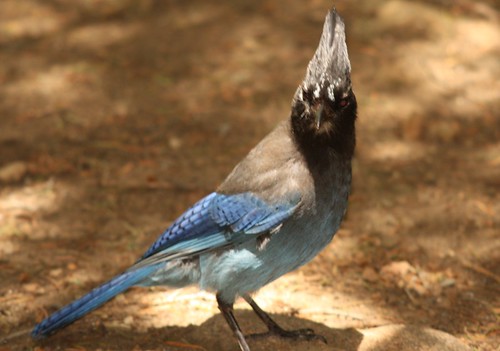
And yet its other end almost glows in contrast, with the gleaming blue wings and tail and the softer blue of its undersides.

Steller's Jay - 6/27/2009

As bold and tenacious as the blue jays or grackles of home, this Steller's Jay became our constant companion ... for as long as we had food in sight. In fact, it scolded us rather soundly when Cowboy "accidentally" dropping a handful of grapes in the direction of our other companion, a fat little chipmunk that had also taken up sentry duty near our table.
Steller's Jay - 6/27/2009

My first instinct was to label his attitude "imperious," demanding his rightful share of the glorious bounty we had brought. But looking at the deep burning embers of his eyes in that shot, I'm beginning to agree with my sister's more instantaneous reaction of "demonic." I certainly wouldn't want to meet this guy alone in a dark alley...


For more great bird photos from around the world, check out Bird Photography Weekly #45.

Bird Photography Weekly

Thursday, July 2, 2009

Quintana Concluded

Besides the enthralling hummingbirds and abundance of wildflowers featured in my two previous posts, there were plenty of other wonders to enjoy at the Quintana Neotropical Bird Sanctuary.
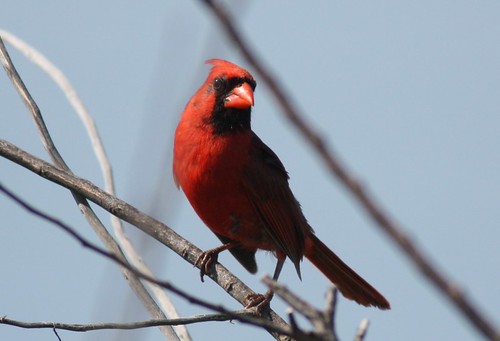
Northern Cardinal - 5/29/2009
Northern Cardinal (Cardinalis cardinalis)

There were cardinals and mockingbirds, ever present and always enjoyable.

Northern Mockingbird - 5/29/2009
Northern Mockingbird (Mimus polyglottos)

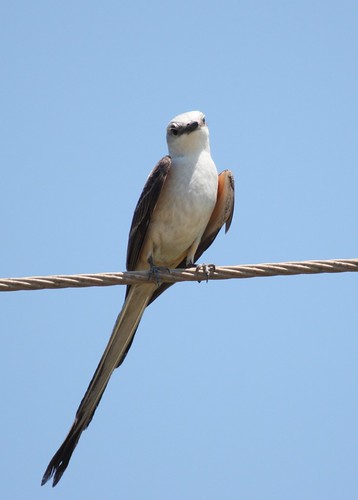
There was a surprising number of Scissor-tailed Flycatchers in and around the area — surprising to me anyway, since I'd never seen them in the area before.

Scissor-tailed Flycatcher - 5/29/2009
Scissor-tailed Flycatcher (Tyrannus forficatus)

This was my first opportunity to photograph these slender beauties or even to observe them close up, and I was amazed both at how graceful they were in the hard winds blowing in from the gulf and at how quickly they moved in flight. I've decided that I'll need quite a bit more practice and familiarity with these tyrant flycatchers (or a good helping of luck) if I want to capture any shareable pictures of them in flight.

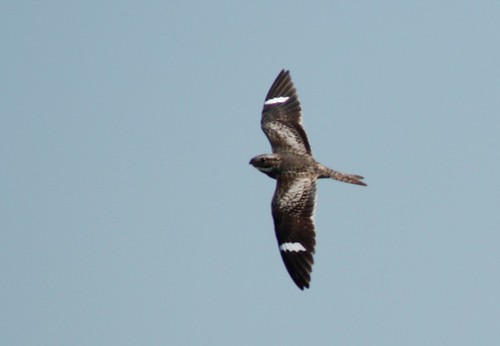
Another treat of the morning's trip was the opportunity to watch five Common Nighthawks wheeling and diving overhead. I climbed to the top of the sanctuary's observation tower and spent a good twenty minutes trailing them as they moved down the island until they finally passed beyond the range of my binoculars. New addition to my life list!

Common Nighthawk - 5/29/2009
Common Nighthawk (Chordeiles minor)

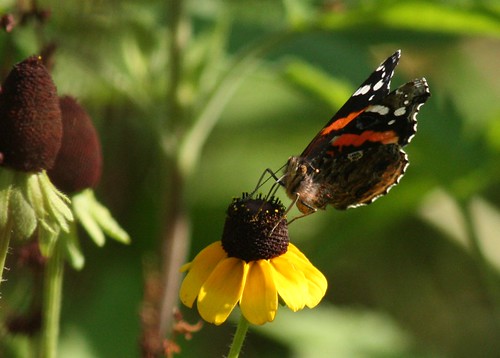
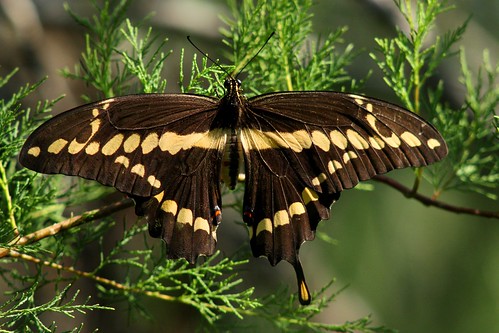
There were also plenty of dragonflies and butterflies on hand, busily enjoying the bounty of this small paradise.

Butterfly - 5/29/2009

Giant Swallowtail - 5/29/2009
Giant Swallowtail (Papilio cresphontes)

I ended the day with a quick drive down the road to nearby Bryan Beach, where the tidal pools hiding behind the dunes often attract a variety of shorebirds, herons and such. This particular morning, two lonesome Willets comprised the total count of shorebirds and no waders were in sight, but the sandbars and the far edges of the water were teeming with Laughing Gulls and terns, including Caspians, Royals and even a couple of Sandwich Terns.

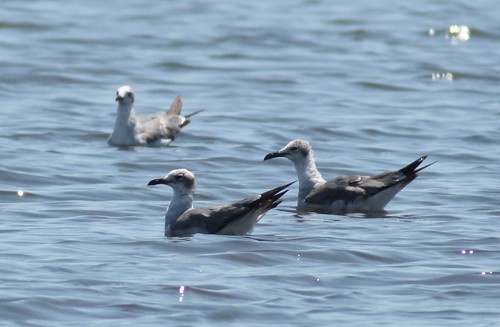
Laughing Gulls - 5/29/2009
Juvenile Laughing Gulls (Larus atricilla)

However, these three young gulls seemed to be the only ones not taking a midday siesta; they were busy cackling and playing in the water like their human counterparts just on the other side of the dunes, enjoying the beautiful weather while the grown-ups lazily soaked up the early summer sun.

Scissor-tailed Flycatcher - 5/29/2009
"What, you're still here?"

Monday, June 29, 2009

The Magical Fairies of Childhood

There are several types of birds that remind me of my grandmother, who for most of my life lived in the piney woods of East Texas. Mammaw always kept bird feeders around her house — always well-stocked and perfectly positioned for maximum viewing from the kitchen windows and the covered back porch — and one of the many thrills of visiting her was seeing the birds that visited her yard and feeders. Most prominent in these memories are visions of chickadees, cardinals and hummingbirds.

Even though those visits to East Texas are far behind me, I get to see plenty of cardinals and more than a few chickadees on a fairly regular basis, and they still hold a special place in my mind. But those hummingbirds of my childhood visits seem more magical than simple memory, especially since I so seldom see them now. And until recently, even the few that I have managed to see have eluded my camera lens.

Luckily for me, that changed a few weeks ago with a trip down to the Quintana Neotropical Bird Sanctuary. After seeing several common and expected birds (mockingbirds, grackles and the like), I spotted something new (for me) to the area.

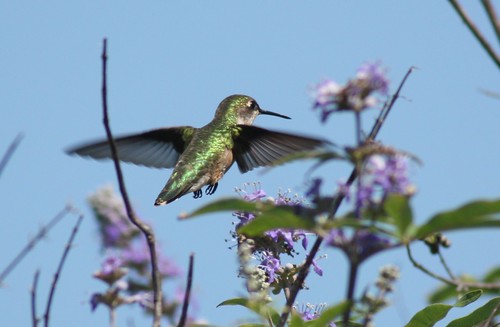
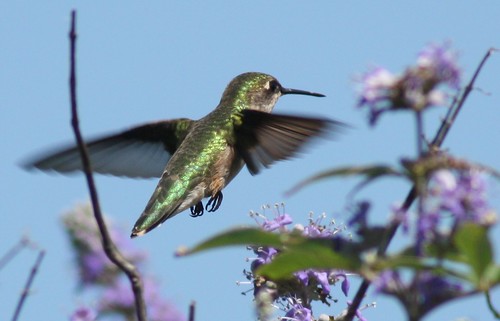
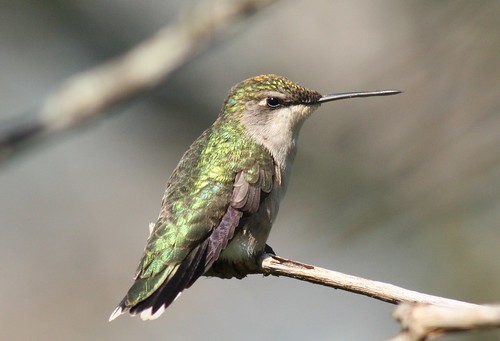
Ruby-throated Hummingbird - 5/29/2009
Ruby-throated Hummingbird (Archilochus colubris)

Off through the branches of the nearest tree I spotted something small and decidedly non-butterfly-ish hovering over a cluster of purple blooms. Hummingbird! I snapped a few hurried shots as quickly as possible before it moved off, out of my line of view.

Ruby-throated Hummingbird - 5/29/2009

I waited a while in eager anticipation, but the little hummer didn't reappear, so finally I moved on. The morning brought a few more pleasant surprises, but no more sign of hummingbirds.

Now, the Quintana site is relatively small — a single block of the small township — but often full of surprises. I was given some excellent advice on my first visit there: don't give up until you have been around the short walking trail at least twice in a row with no new sightings. And sure enough, as I made what I expected to be my last slow circuit on this particular morning, something buzzed across the trail so close in front of me that I instinctively ducked. Expecting a wasp or horsefly or the like, I turned just in time to catch the culprit as she landed daintily on the tip of a slender branch nearby.

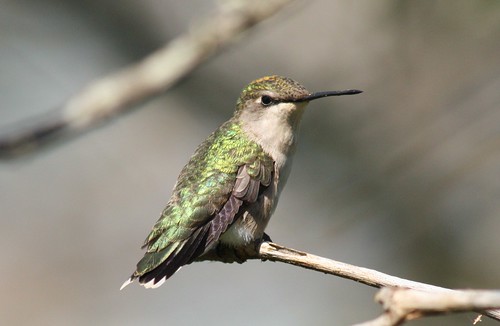
Ruby-throated Hummingbird - 5/29/2009

There she sat in all her beautiful, shimmering glory, with a soft orange dusting of pollen crowning her lovely head. I stood stock still, just watching for a couple of minutes — lost in those magical memories of childhood — before I even thought to slowly bring my camera up and start shooting. Luckily for me, this little lady was quite content to sit and rest for a bit. Most of the time she had her head turned away from me — I'm not even sure if she knew I was there for a while. When she did turn my way, she seemed to size me up rather succinctly and then gave me a little head-cock as if to grant permission for a few more clicks of the shutter.

Ruby-throated Hummingbird - 5/29/2009
Click image for full-size detail

Moments later she was gone in a blur, but the magic remained. And in my mind I was back in East Texas, standing on tippy-toes and straining to see those magical hovering fairies that lived outside Mammaw's kitchen window.


For more great bird photos from around the world, check out Bird Photography Weekly #44.

Bird Photography Weekly

Thursday, June 25, 2009

Birding without Birds

One morning earlier this month, I headed over to Edith L. Moore Nature Sanctuary for a couple of hours, hoping to have a nice quiet morning of birding. Edith L. Moore is a nice little sanctuary run by the Houston Audubon Society, surrounded by neighborhoods and just minutes from one of the busiest freeways in Houston and several key business, medical and shopping centers.

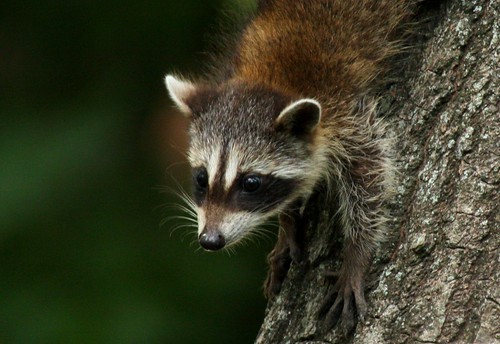
Raccoon

Yet once you head up the gravel drive and start wandering through this lush wooded sanctuary, you would swear you were miles away from civilization. The footpaths wandering through the trees and along the creek are perfect for losing yourself in a world of nature far away from the rush and problems of everyday life, and even on the worst of days you can normally find a dozen or more species of birds here. Is it any wonder that I find some excuse to sneak over there at least once every month or so?

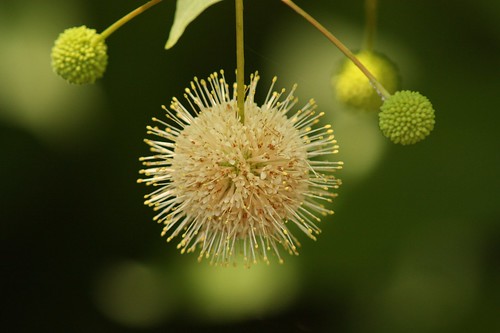
Shapes in nature

But for the first time in all my visits to Edith L. Moore, I was shocked to find the place almost completely barren of birdlife! Sure, the temperature and humidity were battling it out to see which could reach triple digits first. And yes, there were dozens of kids running pell-mell through the park, doing their best to release nine months of pent up energy in one massive celebration of the beginning of summer. But to find only eight species of birds in two whole hours? Oh, the inhumanity of it all!

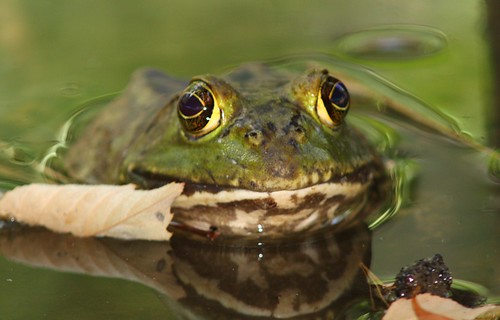
Bullfrog

Actually, I have to admit that it was quite an enjoyable morning. Once I'd seen and logged the handful of birds to be found that morning (chickadees, cardinals, mockingbirds, one far-off woodpecker and a couple others), I looked down for a change and realized why they named it the Edith L. Moore Nature Sanctuary rather than simply a bird sanctuary.

Waiting for lunch

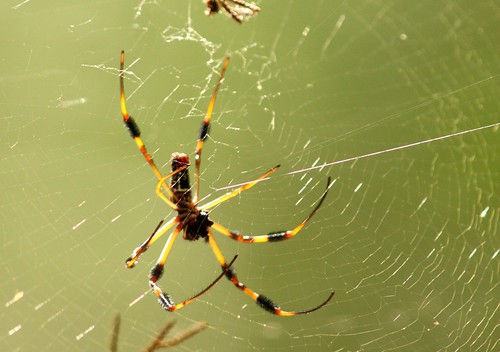
I found wild rabbits munching in one clearing, and two more scurrying from my path near one heavy thicket. There were moss-covered turtles, big bulgy bullfrogs and slithering water snakes in and around the pond. There were squirrels darting through the undergrowth and leaping from branch to branch overhead, and lizards scurrying through the leaves that covered the ground. There were spiders lying in wait in various nooks and crannies, bends in branches, bundles of leaves, and one giant monstrosity hanging right at my eye level with his massive web stretched tightly across the path. There were butterflies and moths, dragonflies and damselflies, crickets and grasshoppers, and more crawlies and winged bugs than I could possibly name.

I see you!

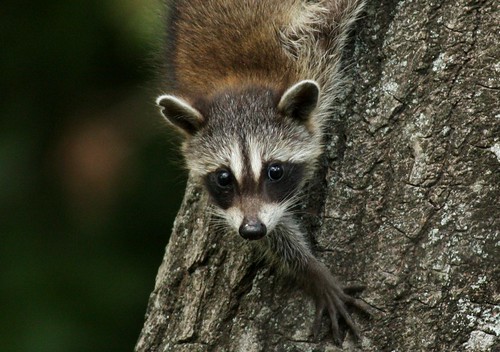
Oh, and the cutest raccoon I've ever seen, warily making his way down this tall tree trunk and disappearing near the water's edge below.

To be honest, this was the best non-bird birding trip I've ever had!

Saturday, June 20, 2009

Little Shrikes on the Prairie

A few weeks ago, I headed out to the Katy Prairie to see what birds might be lingering after the rush of migrations had passed through. There were no big surprises to be found: Grackles, Mockingbirds, fields of Cattle Egrets, a couple of hawks, one lone Crested Caracara. But by far the biggest treasures of the day were a pair of fledgling Loggerhead Shrikes I spotted by the roadside.

Loggerhead Shrike - 5/9/2009

The first one I found was staying as still as could be in the tangle of twigs and vines that lined the edge of Longenbaugh Road. The parents were nowhere in sight, and this little shrike was not taking any chances — the only part of him I saw move as I rolled by was his little head, swiveling slowly to make sure this big creature was not coming any closer.

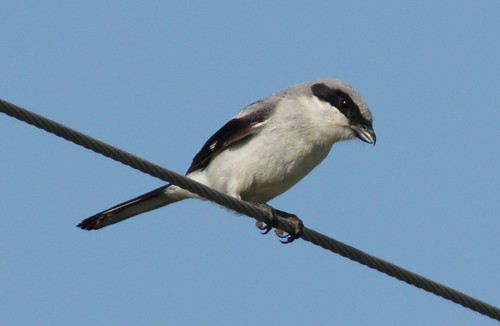
Farther on down the road, I spotted an adult shrike perched on the telephone lines overhead. He/she was keeping a careful eye on something in the bushes below, so I paused a short distance away to watch.

Loggerhead Shrike - 5/9/2009

Sure enough, a minute or two later this young shrike darted out of the bushes and winged its way up to the telephone line, just a few feet away from its watching parent.

Loggerhead Shrike - 5/9/2009

The adult flew off just seconds later, with the youngster following shortly after.


For more great bird photos from around the world, check out Bird Photography Weekly #43.

Bird Photography Weekly

Tuesday, June 16, 2009

Bird Photography Weekly: Cliff Swallows

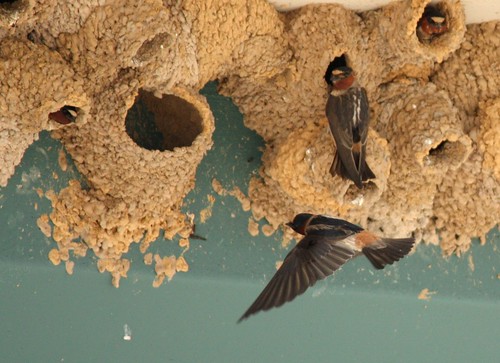
On my last trip out to the Katy Prairie area — maybe three weeks ago, now — I was barreling along Highway 290 when I noticed several swarms of what looked (at 70+ mph) like swallows swooping and diving around and beside some of the highway overpasses. I was running too late to stop on the way back, but I did make a mental note of exactly where I had seen these birds so I go back and find them later.

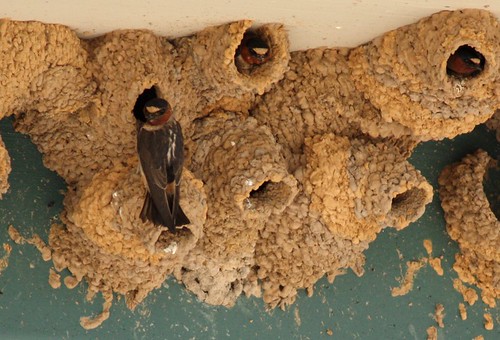
A few days later, I found myself with no lunch plans and no leftovers in the office fridge, so I hopped in the truck and headed back out in search of the swallows. Sure enough, I found two colonies of Cliff Swallows nesting under the highway bridges.

Cliff Swallows - 5/21/2009
Cliff Swallows (Petrochelidon pyrrhonota)

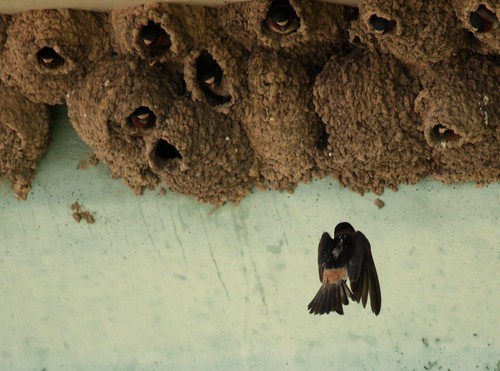
There were dozens of adobe-looking nests plastered to the concrete wall of the freeway overpasses, high rise rooms with a view. Some were obviously new and intact, others appeared to be refurbished models with a cracked edge or two, and still others were just the old broken shells of abandoned nests from years past.

Cliff Swallows - 5/21/2009

Cliff Swallows - 5/21/2009

Almost all of the intact nests seemed to be occupied, with some swallows sitting alertly inside watching the nonstop comings and goings of the other birds. At any given time, there seemed to be at least two or three dozen swallows in the air around each colony, performing acrobatic feats of flight that left me dizzy every time I tried to follow them with my lens.

Cliff Swallows - 5/21/2009

Cliff Swallows - 5/21/2009

I haven't had a chance to return in the three weeks since I first visited these colonies, so I don't know if there are babies in the nests now or if they've already fledged and moved on, but I sure enjoyed the half hour or so that I got to spend watching their frenetic activities.

Cliff Swallows - 5/21/2009

As always, you can click on any of these images to view them on Flickr, and then click the "All Sizes" button above the image to see the larger versions.


For more great bird photos from around the world, check out Bird Photography Weekly #42.

Bird Photography Weekly

Thursday, June 11, 2009

Backyard Doves ... or Feeding the Pigs

Okay, I need some advice from my more experienced birder friends. Or perhaps I should say my more experienced bird feeding friends.

We finally got our first set of bird feeders set up in the back yard about a month or so back. For the first couple of days, we got a few visitors: a pair of cardinals, a sparrow or two, a smattering of chickadees and a handful of blue jays. And then the pigs moved in.

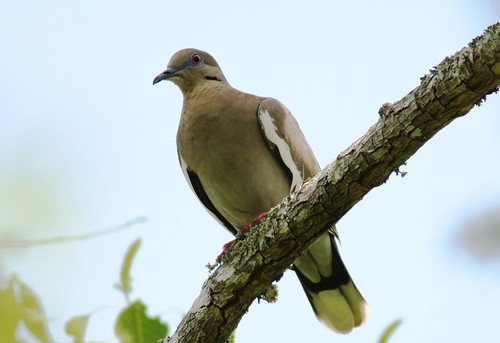
White-winged Dove - 5/13/2009
White-winged Dove (Zenaida asiatica)

From what I've read, White-winged Doves were until recently pretty rare in Texas north of the Rio Grand Valley region. In fact, as I have previously mentioned, they do not even appear in either of my Texas-specific birding guides. However, over the past ten years or so they have quickly moved into the Lone Star state in a big way, becoming regular visitors and even breeders in many parts of the state. And not only have they become a common sight in the Houston area, they are quickly taking over our neighborhood!

For the past four weeks, our feeders have been hosting White-winged Doves almost exclusively. And while they are beautiful birds, they are driving away all the other neighborhood birds from our yard. Within minutes of my filling the feeder, they converge on our back yard. One morning, I looked out the kitchen window and counted nineteen of them (plus one lone Mourning Dove) in our tiny little back yard, with four or five perched on the feeder and trays, a couple more on the surrounding arms, four standing sentry duty on the back fence and the rest looking for scraps on the ground directly below the feeder. And while nineteen is rare, an even dozen at a time has become fairly common. By the time they leave the yard, the feeder has usually been emptied and the cupboard is bare. (Now I know how the owners of the local "all you can eat" Chinese food restaurant feel when all the guys from our office descend on their buffet at once.)

We are currently using a seed mixture recommended by our local Wild Birds Unlimited store manager that is intended to draw in a "nice variety of clinging and perching birds." Unfortunately, the White-winged pigs are driving that nice variety away. According to the bag, the mixture consists of black oil sunflower, sunflower chips, shelled peanuts, safflower and stripe sunflower seeds.

Can anyone recommend a different seed mixture that would attract the other area birds and yet not be quite so appealing to the doves? Or offer any other suggestions that might deter them from their gorge-fest? Any helpful advice would be greatly appreciated!

Thursday, June 4, 2009

Early One Morning on the Way to...

Sunrise - 5/30/2009

Early last Saturday morning, I was on the way to W. G. Jones State Forest to look for woodpeckers, when I just had to stop on the side of the road for a bit. The morning's first light was just peeking over the horizon, painting the Texas sky with beautiful colors before waking the surrounding trees and farmland with its gentle touch. I sat there on the shoulder of the country road and ate my breakfast, soaking in the splendor of this morning light show in the quiet solitude of the moment.


For more intriguing images of the skies above our world, check out the SkyWatch Friday home page.

SkyWatch Friday

Wednesday, June 3, 2009

More from Jones State Forest

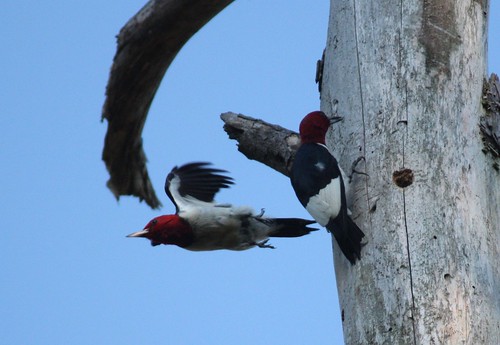
After leaving all the activity at the Red-cockaded Woodpeckers' nest on Saturday, I only had to turn around to find another nesting pair.

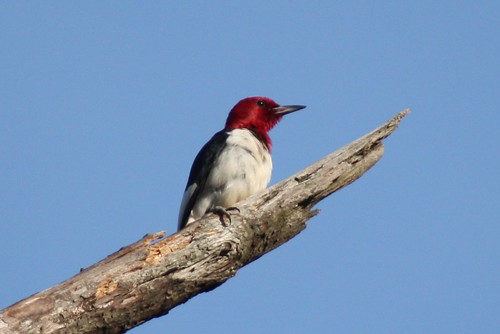
Red-headed Woodpecker - 5/30/2009
Red-headed Woodpecker (Melanerpes erythrocephalus)

The Red-headed Woodpeckers were every bit as active as their endangered cousins, and I got several good looks at both adult birds as they flew to and from their nest cavity. As soon as one would complete a few trips, the other would fly out to begin a new round of foraging, leaving room for the first parent to enter the nest and take over babysitting duties.

Red-headed Woodpeckers - 5/30/2009

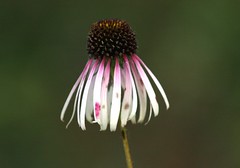
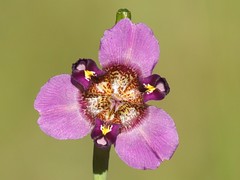
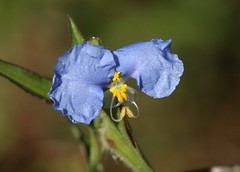
After watching these birds for a short while, I gave up my prime viewing spot to another birder who had joined me and headed deeper into the pine forest. The trail was lined in several places with wildflowers of all sorts. I can only imagine how beautiful the area must have looked a month ago when the spring flowers were in full bloom.

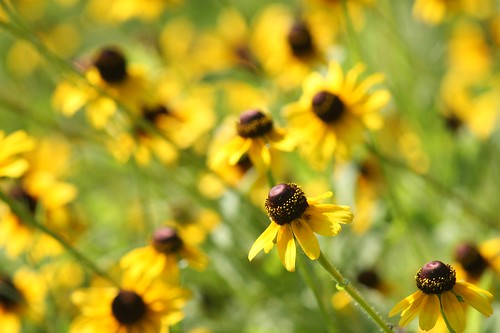
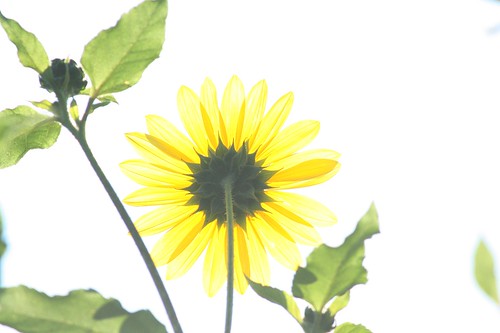
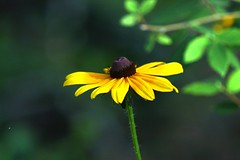
Wildflowers Wildflower Wild Iris Wildflower Black-eyed Susan

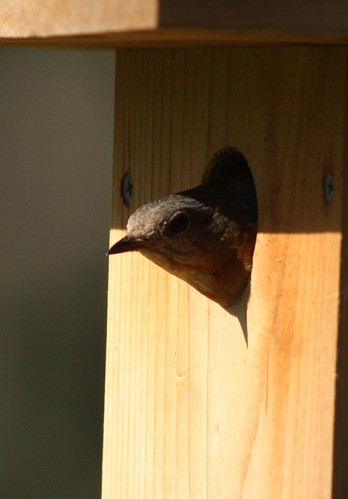
A volunteer organization has placed a number of bluebird nestboxes around the area, and I saw at least three that are in use.

Eastern Bluebird - 5/30/2009
Eastern Bluebird female (Sialia sialis)

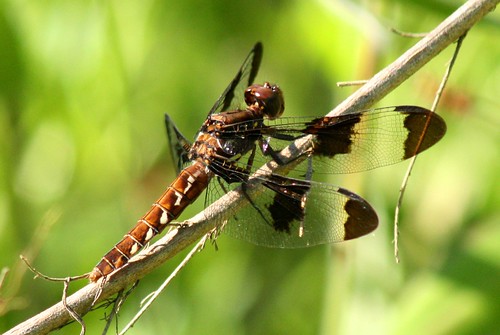
The woods were full of life, from the cawing of crows and the happy calls of cardinals, mockingbirds and pine warblers to the fluttering of a myriad of butterflies and dragonflies.

Dragonfly - 5/30/2009

And while I didn't see any of the other woodpecker species that normally summer in the area, like the Downy and the Red-bellied woodpeckers, the nesting Red-cockadeds and the abundance of Red-headed Woodpeckers that were all over the park were more than enough to satisfy my woodpecker cravings.

Red-headed Woodpecker - 5/30/2009

All in all, a fantastic morning of birding to kick off the summer season!